Singapore's first arts university celebrates its inaugural commencement, arguing Al makes human-led creativity more vital than ever.
Educators prioritise "productive struggle" and human judgment to ensure
students engage with Al ethically and critically.
Strategic interdisciplinary collaboration and process-based assessments
prepare graduates to lead innovation by asking essential human questions.
As we enter a time increasingly shaped by artificial intelligence, the answer to some of
higher education's most pressing questions may lie in an education that has long been considered less practical: the arts. "Technology can create content, but to make this content deeply meaningful and
impactful, we need people to ask the right questions, make sense of complexity, decide
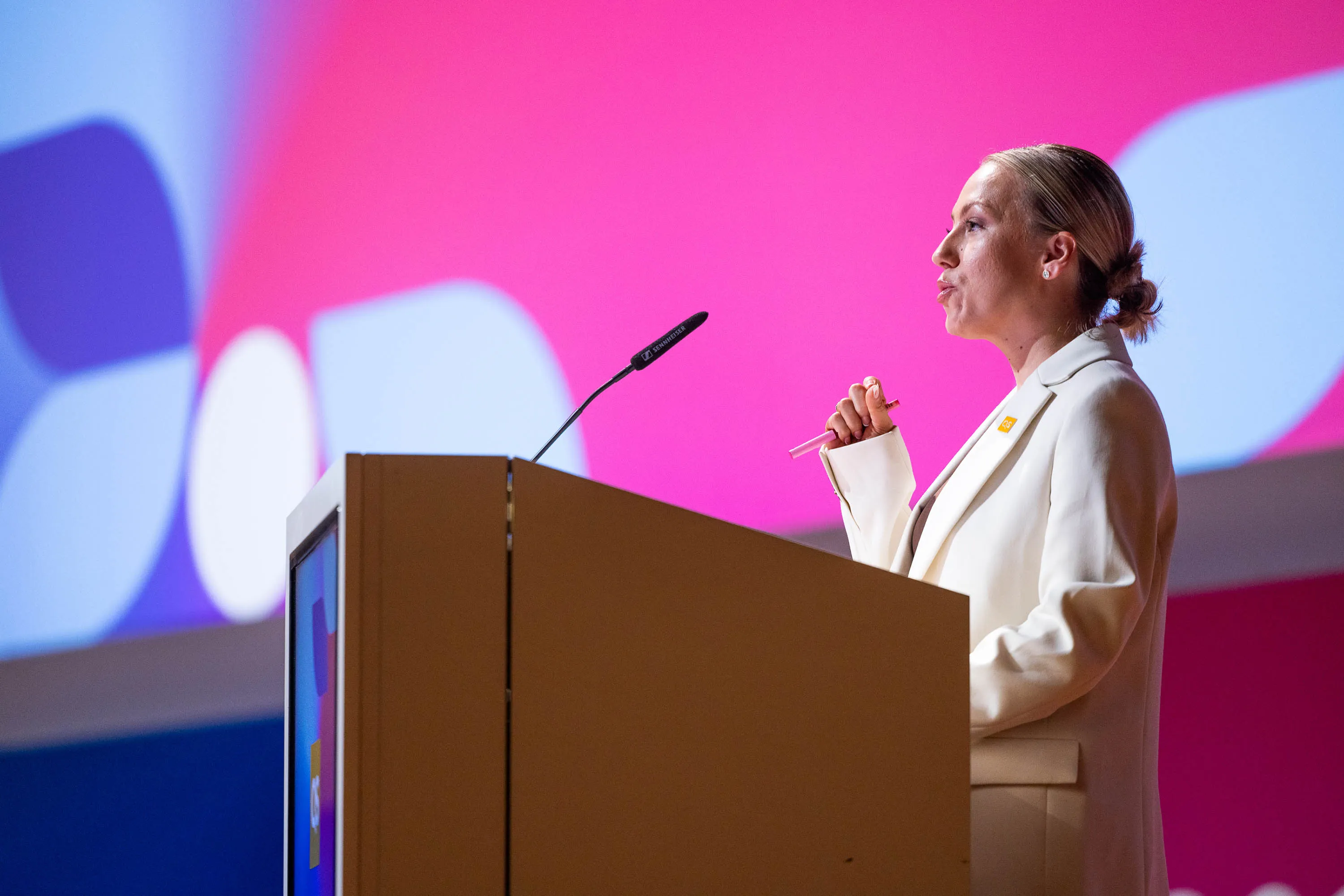
what is worth creating, and think completely out of the box," said Desmond Lee,
Singapore's Minister for Education, at the inaugural commencement ceremony of the
University of the Arts Singapore (UAS). “That is why an arts education matters more than ever."
The ceremony marked a milestone for Singapore's higher education landscape. An
alliance between LASALLE College of the Arts and the Nanyang Academy of Fine Arts
(NAFA), UAS was established in 2022, as Singapore's first university dedicated to the
arts. Held on 7 August, the graduation was the first time a cohort from both LASALLE and NAFA completed their studies under the UAS banner.
Yet beyond celebrating a graduating class, the event became a reflection on the future
of higher education itself — and the distinctly human qualities universities must cultivate in an Al-powered world.
Creating meaning in an Al-generated future
Artificial intelligence was never presented as the enemy of creativity. Instead, speakers
at UAS' inaugural commencement framed it as a catalyst for rethinking what makes
human creativity valuable.
Professor Kwok Kian Woon, Vice Chancellor of UAS, reminded graduates that while
technology has given society unprecedented access to vast volumes of knowledge, “our
enduring value lies in our capacity for human judgement and for responsible decision-
making". Their education, he said, had given them specialised and interdisciplinary arts training while developing them "as whole persons".
That sentiment was shared by Minister Lee, who acknowledged the uncertainty many
graduates feel as rapid technological advances reshape society and the workplace. Yet rather than questioning the relevance of an arts education, he argued the opposite. “As technology becomes more capable," he said, "deeply human qualities will matter ever more: creativity, judgement, empathy, cultural fluency, wisdom and values."
In his commencement speech, Mitchell Hoo, recipient of the McNally Award for
Excellence in the Arts — an award recognising the most outstanding graduate at
LASALLE — acknowledged that Al has understandably sparked anxiety within creative
industries. Yet he encouraged fellow graduates to see technological disruption not as a reason to retreat, but as an opportunity to evolve. “While Al may augment creativity, the imagination and purpose behind it remain uniquely our own," he said.
f Ups | ile NAFa
. . re Pinnacle
University of the Arts Singapo |
LASALLE and NAFA | McNally Awa'
t Excellence In
Commencement |
2 a Meee m4 of the Arts Sin=apor~) ~
L TENS J (LLE and NAFO S79 Se a
ave. “| 7 ee encement isi" fiz}jo- SY
es wait’ Pe) y i " | v A ‘BK
Rethinking the purpose of art and higher education
For universities around the world, the rapid rise of generative Al has prompted
fundamental questions about curriculum, assessment and graduate employability. For
UAS, the conversation went beyond simply teaching students how to use new technology.
Speaking to QS Insights, Professor Kwok said UAS wants students to move beyond Al
literacy and learn to engage with Al "ethically, critically and with a strong sense of human
agency”. Students and faculty across LASALLE and NAFA are already exploring
emerging technologies for ideation, experimentation, visualisation and interdisciplinary
practice across areas, including design, fashion, photography, animation, film and
performance.
At the same time, the university is conscious of what students could lose if technology
simply makes the creative process easier.
Professor Kwok described the importance of allowing students to experience
“productive struggle": grappling with difficult problems, making mistakes and deepening their craft before turning to Al at particular stages of their work. The aim, he said, is to
help students develop their own discernment and creative agency rather than bypassing
the difficult parts of learning.
That philosophy extends beyond individual artistic disciplines. UAS' Common
Curriculum brings LASALLE and NAFA students together for interdisciplinary learning,
while Industry-Based Learning through internships and live projects gives students
opportunities to adapt, collaborate and solve problems in real-world settings.
Professor Kwok argued that arts graduates should be seen not only as future artists and
designers, but as collaborators in an innovation-driven economy. “Arts graduates certainly play a crucial role in Singapore's innovation-driven economy -
not just alongside but in active collaboration with STEM graduates," he said. “Our
specialist arts education is complemented by interdisciplinary learning... By combining
critical thinking and creative practice, our graduates contribute to a wide range of
sectors, including public service, education, healthcare, business, and technology.”
a) BAAR ty fd fs *
Vee a es AF
UAS' approach reflects a broader understanding of what an arts education can offer,
and this is already being tested against the realities of Al. In Singapore's arts education
sector, institutions are moving away from simply policing students’ use of generative Al
and towards understanding how it can be used responsibly in creative practice.
LASALLE, for example, established a working group on GenAl in 2024 and introduced
guidelines for its use in assignments. Its assessment practices increasingly emphasise students’ creative processes, including journals, drafts and oral explanations, rather than relying on Al detection tools alone.
For Keane Tay Hao Qing, recipient of NAFA's award for its most outstanding graduate,
the Ngee Ann Kongsi Gold Medal, this capacity to question is at the heart of design education.
In his commencement speech, Tay said that design was never simply about finding the
right answer. “There is no answer sheet for empathy. There is no marking scale for
curiosity and definitely no model solution for imagination," he said. Designers, he
argued, must observe, listen and empathise before they begin creating.
Tay later told QS Insights that while Al may make it easier to generate answers and
outputs, artists and designers can distinguish themselves by "challeng[ing] the status quo and imagin[ing] possibilities beyond what already exists". “We are trained not to settle for what is, but to keep asking what it could be," he said.
An international university for Asia's creative economy
Although the commencement marked a distinctly Singaporean milestone, its outlook was international.
In his opening remarks, Professor Kwok welcomed graduates and families from ASEAN,
China, India and other countries, noting that UAS, Singapore's arts institutions and the
nation itself "thrive within and draw inspiration from SEA, the wider Asian region, and
Both LASALLE and NAFA have long attracted students from across Asia, and UAS intends to build on those existing connections. Professor Kwok told QS Insights that the university plans to expand its regional networks,
through student exchange and artistic and educational collaboration. “We want our
faculty, students, and graduates to look beyond Singapore, learn from different cultures, and collaborate across borders,” he said.
The university also participates in regional and global platforms, including symposia,
conferences, faculty exchanges, festivals and residencies, with the aim of developing a distinctive voice in arts education, practice and research within the region and beyond.
This ambition is reflected in UAS' broader mission. The university says it aims to
combine teaching, practice and research while working with arts communities and
industry partners locally and internationally, strengthening Singapore's position as a
creative hub in Asia.
ao), @ Aa rEL SR
The human advantage
As the ceremony drew to a close, it became evident that the occasion represented more
than the conferral of degrees. It offered a vision for what arts education can become in an era of rapid technological transformation.
Throughout the morning, speakers did not argue that the arts should be protected from
Al. Instead, they suggested something more ambitious: that the rise of Al makes human creativity, empathy, judgement and curiosity even more valuable.
For UAS, the inaugural commencement celebrated the achievements of one graduating
class. It also marked the beginning of its ambition to position arts education not as an alternative to technological progress, but as one of its essential complements.
That may ultimately be the human advantage UAS is trying to cultivate. As Hoo puts it:
“Anybody can pick up a camera, garner followers to influence trends, or prompt a piece
of content. But when the ability to produce creative work becomes increasingly
democratic, the point of view becomes a rarity.”
The future of creative work will not necessarily belong to those who reject new
technologies, or simply to those who adopt them fastest. The ability to ask why, to
understand another person's experience, to imagine what does not yet exist and to
decide what is worth creating remains at the heart of creative work.
And perhaps that is why, in the age of Al, the case for arts education is not about
preserving the past. It is about preparing people to imagine the future.


.jpg)