.jpeg)
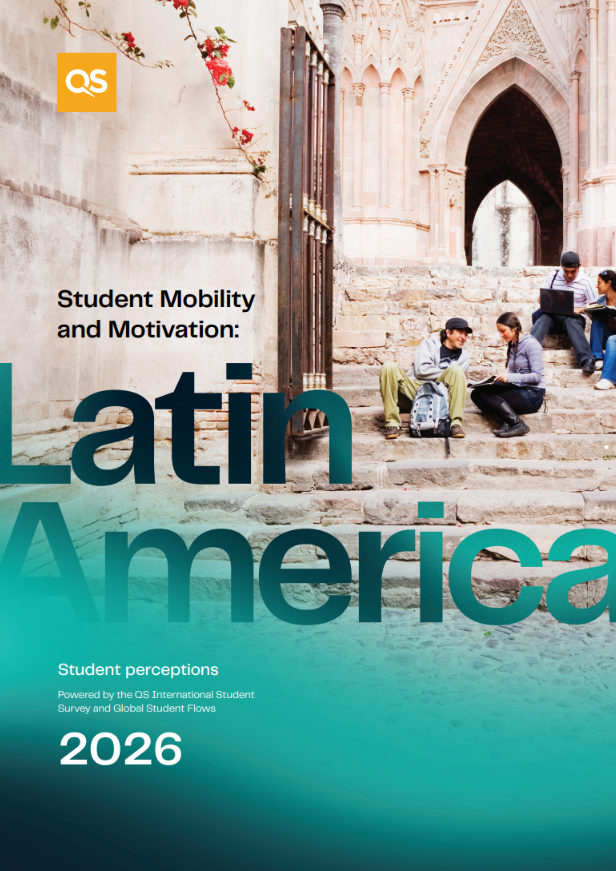
Student mobility and motivation: Latin America

.png)
29 September 2026


Latin America’s international student market is forecast to expand substantially by 2030, with the number of internationally mobile students from the region expected to rise from approximately 366,000 to more than 500,000. Much of this demand will be inter-regional - how can LATAM institutions capture capture this demand, and drive new enrolments?
In our report, understand:
Read an excerpt below or download the full report.
Official university websites remain the dominant information source for LATAM inbound students, but their influence has declined steadily from 76% in 2022 to 64% in 2026. General online search has followed a similar downward path, falling from 61% to 54%. This does not reduce the importance of owned digital channels, but it does suggest that students are no longer relying as heavily on a single institutional source when researching study options.
Social media has become a more established part of the decision journey, rising from 42% in 2022 to 47% in 2026 after peaking at 50% in 2023. University fairs and information sessions have also strengthened, reaching 45% in 2025 and 2026. Students are using formal institutional channels alongside social proof, live engagement and peer-facing content.
The clearest decline is in rankings, which fell from 42% in 2022 to 28% in 2026. Course-finder websites have also softened slightly, from 35% to 32%. By contrast, education agents have grown from 19% to 23%, printed prospectuses from 21% to 26%, and phone calls with institutions from 13% to 18%. This suggests that while digital research remains central, students are starting to place more value on guided, practical and reassurance-led sources as they move closer to decision-making.
LATAM inbound students increasingly expect faster communication from universities, particularly at the application-outcome stage. For enquiry responses, expectations have remained relatively stable but are weighted towards speed: in 2026, 35% expect a complete and personal response within 24 hours, while a further 28% expect one within three days. Together, nearly two-thirds expect a meaningful enquiry response within three days or less, leaving limited tolerance for slow or generic follow-up.
Expectations around application outcomes have shifted more clearly towards speed. The share expecting a decision within 24 hours has risen from 19% in 2022 to 29% in 2026, while those expecting an outcome within three days increased from 19% to 23%. The one-week expectation has remained broadly stable, at around a quarter of students.
The clearest evidence of a tightening expectation is in the decline of longer acceptable waits. For application outcomes, the share prepared to wait within one month or within three months fell from 37% in 2022 to 25% in 2026. For enquiry responses, longer waits have remained lower and more stable, with 14% prepared to wait up to three months in 2026. LATAM inbound students may tolerate some processing time for applications, but the acceptable window is narrowing. Institutions that can provide faster, more transparent updates are better placed to maintain applicant confidence through the conversion journey.
Key Questions to Consider: