.jpeg)


Scaling UK-India higher education collaboration

24 September 2026


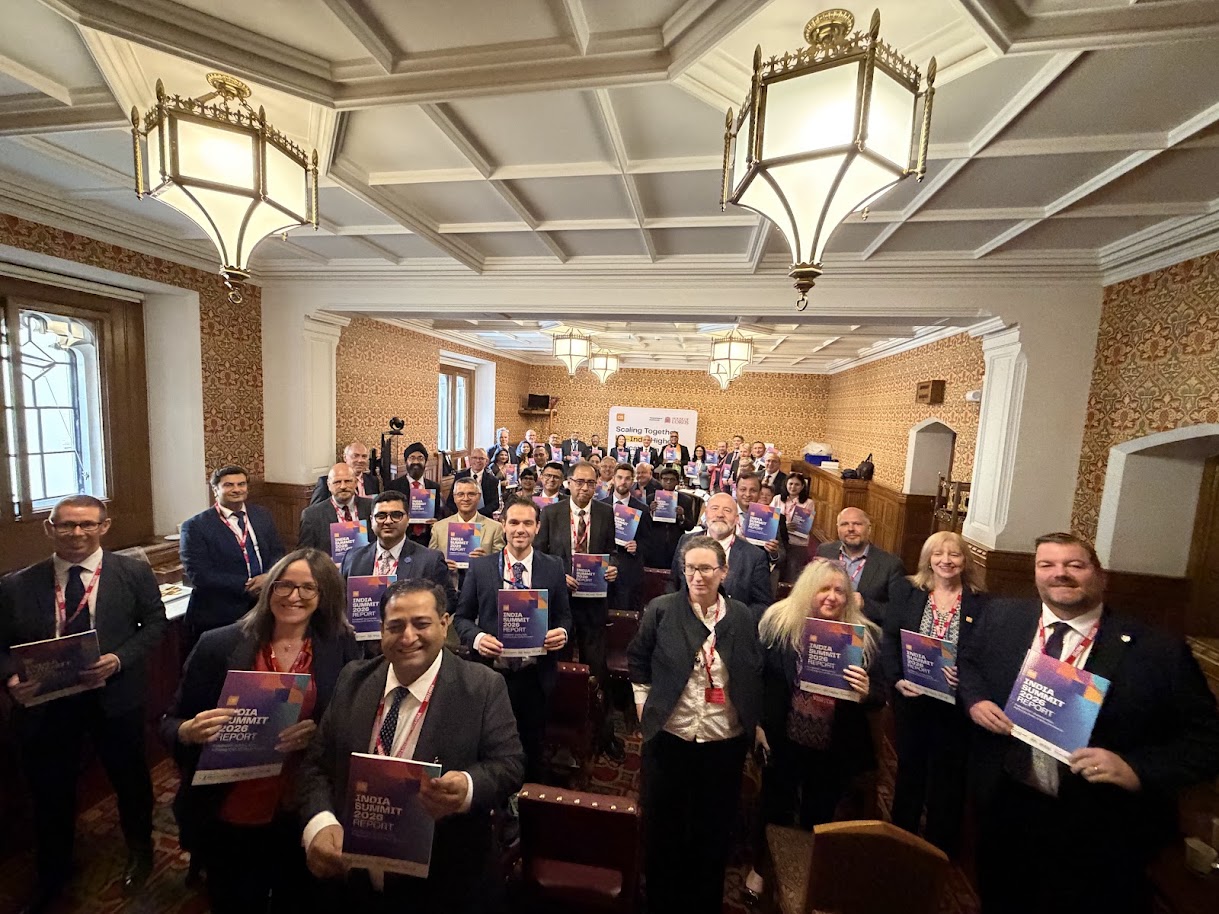
QS convened senior higher education and industry leaders from India and the UK at the House of Lords for a closed-door discussion on the next phase of bilateral collaboration.
Co-hosted by QS CEO Jessica Turner and Lord Patel of Bradford, and organised under the theme “Scaling Together: UK-India Higher Education in the FTA Era”, the fourth annual roundtable examined how institutions and policymakers can move from ambition and individual success stories to partnerships capable of delivering sustained impact at scale.
The timing is significant. The UK-India Comprehensive Economic and Trade Agreement entered into force on 15 July 2026, while India-UK Vision 2035 identifies education and skills, technology and innovation as central pillars of the wider relationship. India’s National Education Policy 2020 has also opened new routes for international collaboration, including joint and dual degrees and foreign university campuses.
Yet the discussion made clear that the future of the relationship cannot rest on a single model. International campuses are one part of a much broader landscape that includes co-designed curricula, collaborative research, co-supervised doctorates, online and hybrid provision, entrepreneurship, industry partnerships and reciprocal student and faculty mobility.

Participants shared examples of collaboration that has endured because it is embedded in institutional strategy and supported by shared investment. These included long-running mobility programmes, jointly governed research funds, co-created academic programmes and university-industry initiatives addressing priorities such as healthcare, clean energy, advanced manufacturing and artificial intelligence.
A recurring lesson was that successful partnerships often begin at a manageable scale. Joint PhD supervision, seed-funded research projects, short academic exchanges and targeted innovation programmes can establish trust between individuals and institutions. With clear governance and evidence of value, those relationships can then expand into larger research, teaching and enterprise partnerships.
The discussion also challenged the sector to judge internationalisation by more than recruitment volumes or the number of agreements signed. Stronger measures would include student and faculty participation in both directions, research outputs, follow-on investment, graduate outcomes, industry engagement and demonstrable social or economic impact.

The roundtable tested four areas in which coordinated action by governments, regulators, universities and professional bodies could help successful partnerships scale.
Short funding windows and uncertainty over eligibility make it difficult to develop ambitious bilateral programmes. Participants called for longer-term, jointly assessed funding mechanisms that can support university-industry consortia, co-supervised doctoral study and collaboration in shared priority areas. Clearer treatment of international campuses within research funding, intellectual property, data governance and export-control frameworks will also be important.
The 2022 memorandum on mutual recognition of academic qualifications created an important foundation. However, credit transfer, grading equivalence, joint and dual awards, and professional recognition in regulated fields can still require repeated programme-by-programme negotiation. A standing mechanism bringing together universities, governments, regulators and professional bodies could develop clearer, more reusable pathways and provide named points of contact.
Student mobility remains important, but participants emphasised the need for a wider lens. Faculty, doctoral researchers, technical staff and early-career academics also need affordable, predictable routes for short and repeated visits. Visa costs, processing uncertainty and changing post-study arrangements can weaken confidence and make even well-funded partnerships difficult to deliver. Institutions, in turn, must invest in mobility in both directions and report transparently on participation and outcomes.
India’s scale and diversity require multiple approaches. Alongside international campuses, participants highlighted joint institutions, co-located provision, joint and dual degrees, hybrid learning and shorter mobility models. Greater regulatory clarity could allow institutions to test approaches that are locally relevant and affordable, while maintaining robust academic governance, equivalent quality standards and strong student protection.

Across every model, reciprocity emerged as the defining principle. Partnerships should expand opportunity for UK-based students and researchers as well as their Indian counterparts. They should respond to local priorities rather than transplanting provision, connect universities with employers and regional ecosystems, and be structured around shared decision-making rather than a one-way transfer of programmes or talent.
Affordability and access were equally prominent. India’s ambition to raise higher education participation to 50 per cent by 2035 cannot be met through international campuses alone. Digital, hybrid and stackable forms of learning will therefore be an important part of the long-term picture, provided questions of recognition, quality and credit transfer can be resolved.
QS will develop the roundtable’s conclusions into a focused set of recommendations for stakeholders in both countries. The discussion will also inform the next QS India Summit in Goa, where leaders will continue the work of translating policy opportunity into institutional delivery.
The challenge set in the room was a useful one: when leaders reconvene next year, they should be able to identify concrete changes produced by the conversation. That means moving beyond statements of intent towards shared funding, clearer pathways, reciprocal mobility and partnerships whose value can be demonstrated.
The UK-India higher education relationship has no shortage of ambition. Its next phase will depend on the mechanisms, trust and long-term commitment required to turn that ambition into outcomes for students, researchers, employers and communities in both countries.