
.jpeg)

What will define Europe's leading universities by 2030?
.png)
8 July 2026


European higher education is entering a new phase where competitiveness depends as much on skills, innovation and adaptability as it does on reputation. As AI transforms work, demographic shifts reshape student populations and global competition intensifies, universities are being challenged to rethink how they prepare learners and demonstrate value.
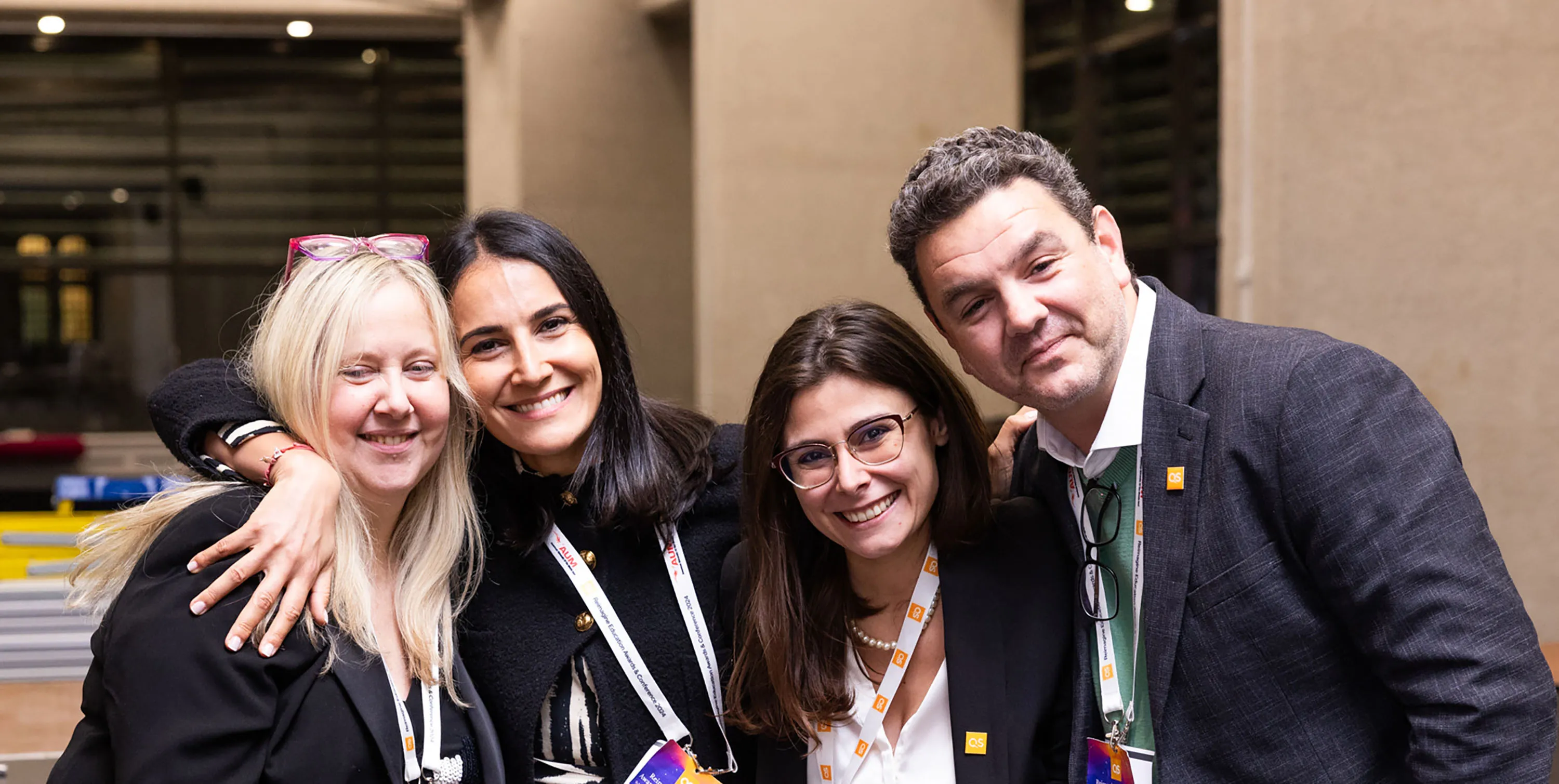
Discussions at the QS Higher Ed Summit: Europe 2026 reflected these broader shifts. Across sessions on employability, AI, innovation and student experience, four strategic shifts emerged that are likely to shape the future of European higher education over the coming years.
"The largest skills gaps aren't technical, but remain human."Universities are increasingly being judged not only by the education they provide, but by the skills and outcomes their graduates demonstrate. While Europe has long been recognised for academic excellence, international collaboration and research strength, AI, shifting workforce demands and growing global competition are reshaping what institutions need to deliver. Rather than asking how universities can maintain their reputation, the question is increasingly how they can equip learners with the skills, mindsets and adaptability needed to thrive in an uncertain future. This shift was reflected throughout discussions at the QS Higher Ed Summit: Europe 2026, where leaders explored how higher education can respond to the changing demands of students, employers and society.
Ben Sowter, QS Senior Vice President, argued that AI has not created the skills gap, but it has accelerated the need to address it. As economies transform, the pressure extends beyond employers to universities, curricula and students themselves, all of whom are navigating labour markets which are rapidly restructuring. Yet, rather than viewing AI solely as a threat, it is important to note that its impact will be uneven. While some roles will be automated, many more will be augmented, increasing demand for graduates who can adapt, reskill and apply distinctly human capabilities alongside technology.
This thinking is reflected in the QS World Future Skills Index 2027, which highlights how effectively economies are preparing for the future of work. The findings reinforce that the challenge is not simply one of technical expertise. As Sowter noted, "the largest skills gaps aren't technical, but remain human." In an AI-enabled economy, capabilities such as critical thinking, communication, collaboration and judgement are becoming the skills that will increasingly define graduate success.
The AI challenge facing higher education is no longer technological, but institutional. As AI becomes embedded across teaching, research and operations, universities are being challenged to rethink how they govern, develop staff, design curricula and make decisions. At the QS Higher Ed Summit: Europe 2026, speakers argued that becoming AI-ready is less about adopting new tools and more about building the institutional capability to respond responsibly and adapt at pace.
Successfully embedding AI requires universities to move beyond AI literacy towards AI fluency and intentionality. As speakers at the Summit argued, developing graduates who understand how AI works is only one part of the challenge. Equally important is ensuring that academic and professional staff have the skills, confidence and governance frameworks needed to integrate AI responsibly across teaching, research and operations. This reflects findings from the Generative AI in Higher Education: Academic and Student Perspectives report, which found that 94% of students believe it is important for universities to incorporate Generative AI into the curriculum and learning experience. As Dr Michelle Sisto, Associate Dean of the EDHEC AI Centre, explained, institutions must address AI across the "entire realm of our stakeholders", recognising that meaningful transformation requires organisation-wide change rather than isolated initiatives.
"Europe has something unique."
While global competition in higher education continues to intensify, Europe's greatest advantage is not scale or speed, but its long-standing tradition of collaboration. Across research, innovation and education, partnerships between universities, industry and governments have helped establish the region as one of the world's strongest higher education ecosystems. As Andrew Plant, QS Executive Director – Europe, remarked during the opening session at the Summit, "Europe has something unique," pointing to the decades of alliances and international partnerships that continue to capture the region's success.
Collaboration is increasingly becoming essential to solving higher education's most complex challenges, from AI adoption and skills development to innovation and sustainability. Rather than operating in silos, universities are being encouraged to work more closely with industry, governments and one another to ensure research translates into real-world impact and graduates are prepared for rapidly evolving labour markets. Discussions at the QS Higher Ed Summit: Europe 2026 reinforced this shift, with leaders highlighting cross-sector partnerships and interdisciplinary collaboration as critical to strengthening Europe's innovation ecosystem and long-term competitiveness.
"Talent is everywhere but opportunities are not."
Student success can no longer be defined by enrolment or graduation alone. Today's learners arrive with different ambitions, backgrounds and support needs, and increasingly expect universities to provide more personalised pathways that prepare them for both employment and lifelong learning. As the traditional education-to-employment journey becomes less linear, institutions are being challenged to offer greater flexibility, stronger career guidance and more holistic support.
This shift was reflected in discussions on displaced learners, where speakers highlighted the importance of designing education around learners' individual circumstances rather than expecting students to adapt to existing systems. Discussions explored how flexible delivery models, targeted support and closer collaboration with governments and community organisations can help remove barriers to participation, while recognising that inclusion extends far beyond access alone. As Marianne Knarud, Head of Office, Global University Academy, University of Oslo, remarked, "Talent is everywhere but opportunities are not."
Student perspectives echoed this shift. During the Summit's Ask a Student! session, learners spoke about the value of feeling supported throughout their university experience, alongside preparing for an increasingly uncertain future. These discussions echoed wider conversations across the summit, where employability, AI capability and transferable skills were increasingly viewed as part of a broader student experience rather than standalone initiatives. Together, they reflected a shift towards more personalised, learner-centred education; one that recognises success is shaped not only by academic achievement, but by belonging, adaptability and the confidence to navigate a rapidly changing world.
Europe's universities already possess many of the foundations needed to succeed. The challenge now is turning those strengths into action by embedding future skills, embracing responsible AI, strengthening collaboration and designing education around the needs of tomorrow's learners.