
.jpeg)


The jobs behind the UK’s industrial strategy
.png)
26 March 2026


The UK government’s Industrial Strategy identifies eight priority sectors (the IS-8) expected to drive long-term economic growth, innovation and high-value employment. Together, these sectors - advanced manufacturing, clean energy industries, creative industries, defence, digital and technologies, financial services, life sciences, and professional and business services - account for roughly 32% of the UK economy.
However, delivering this strategy depends on more than sector investment. It requires the right workforce and skills pipeline.
In a new report, The strategic role of higher education to deliver the Government’s Industrial Strategy, produced in partnership with the University of York and Public First, QS Quacquarelli Symonds examines how the IS-8 map onto the structure of the current UK labour market. By analysing nearly 1,900 occupations, the research identifies the roles most critical to delivering the strategy - including more than 600 “transectoral” occupations that are highly important across multiple sectors and therefore central to the UK’s wider growth ambitions.
Read the full report here.
The strategic role of higher education to deliver the Government’s Industrial Strategy maps the UK labour market against the government’s eight priority sectors. By analysing 1,890 occupations, it identifies the roles most critical to delivering the Industrial Strategy and where demand for talent is likely to grow.
The report assesses the importance of each occupation to the delivery of the eight sectors. Across the economy, many roles have only a limited connection to individual industries. For example, more than 650 occupations are ranked as having relatively low importance to advanced manufacturing.
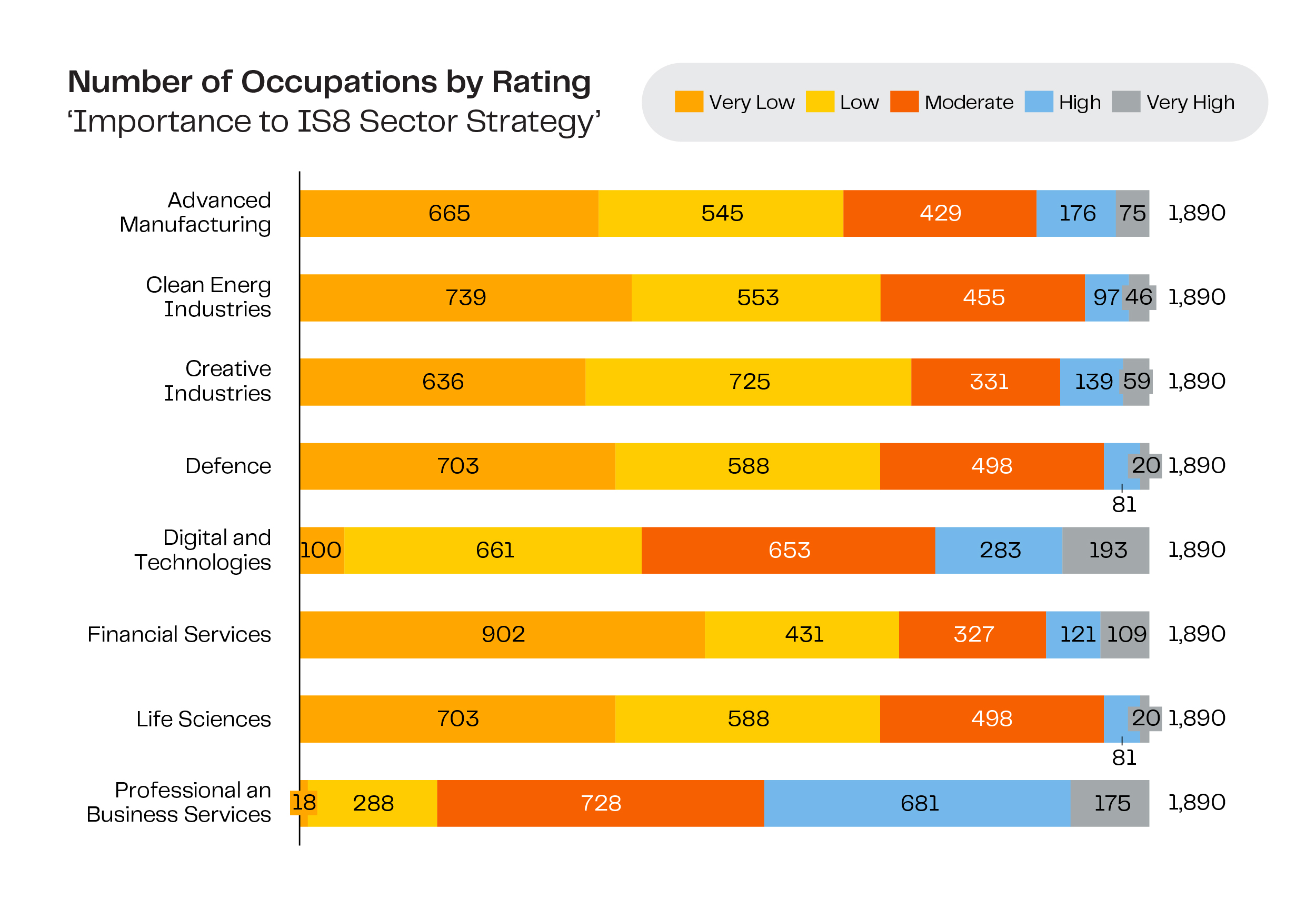
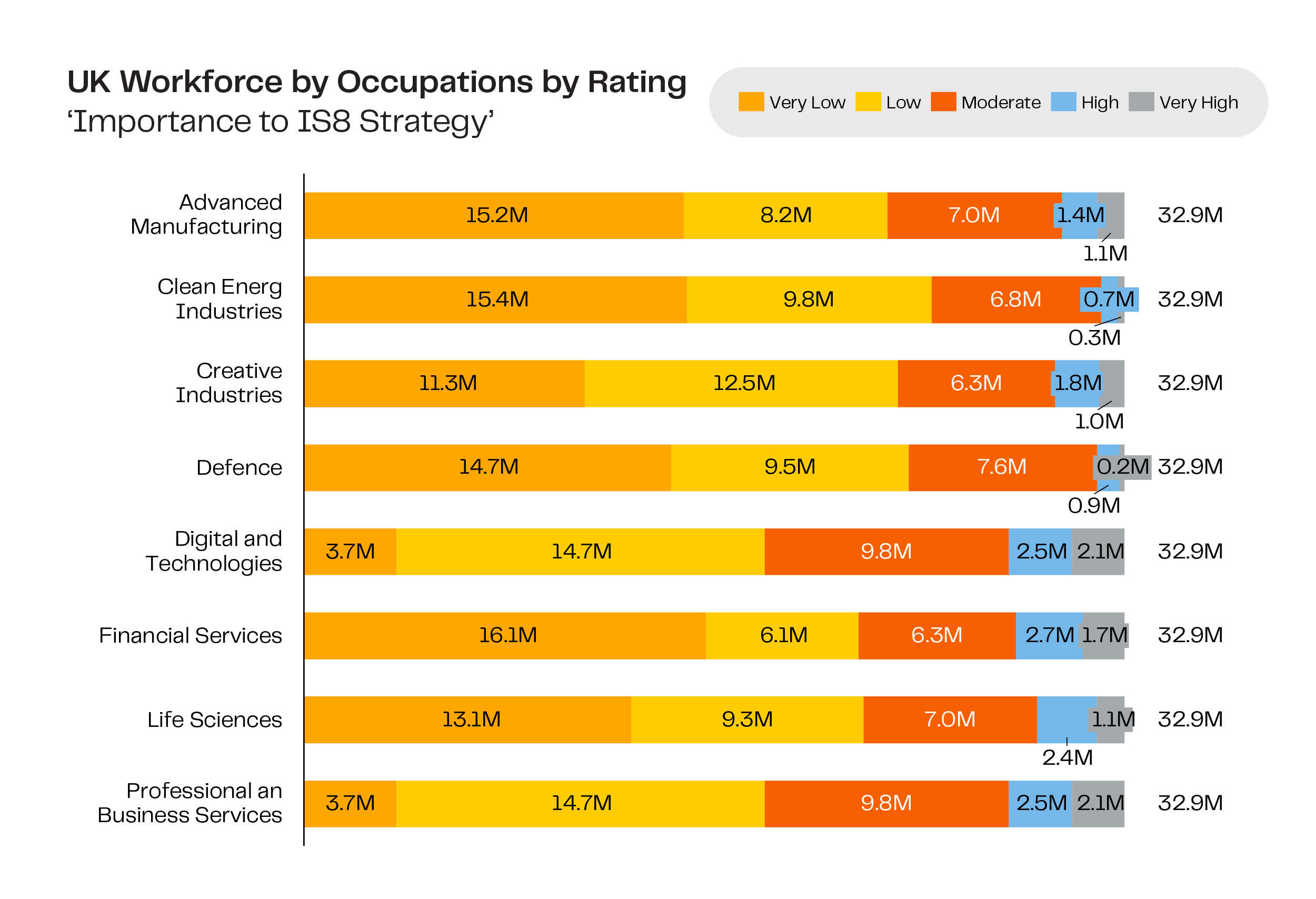
However, the analysis in the report also reveals a core group of occupations that are highly important to sector growth. These roles form the talent base required to scale industries such as clean energy, artificial intelligence and life sciences, helping policymakers, employers and education providers identify where skills investment will matter most.
Noted by Nunzio Quacquarelli, QS President & Founder, in a recent HEPI blog, the UK’s growth challenge may depend less on the pace of technological adoption and more on whether the country can develop the graduate-level skills needed to deploy technologies such as artificial intelligence effectively.
Across the eight sectors, several occupations are likely to become increasingly important as the Industrial Strategy unfolds.
Examples include:
Many of these roles combine advanced technical expertise with emerging technologies, particularly in artificial intelligence, energy systems and advanced engineering.
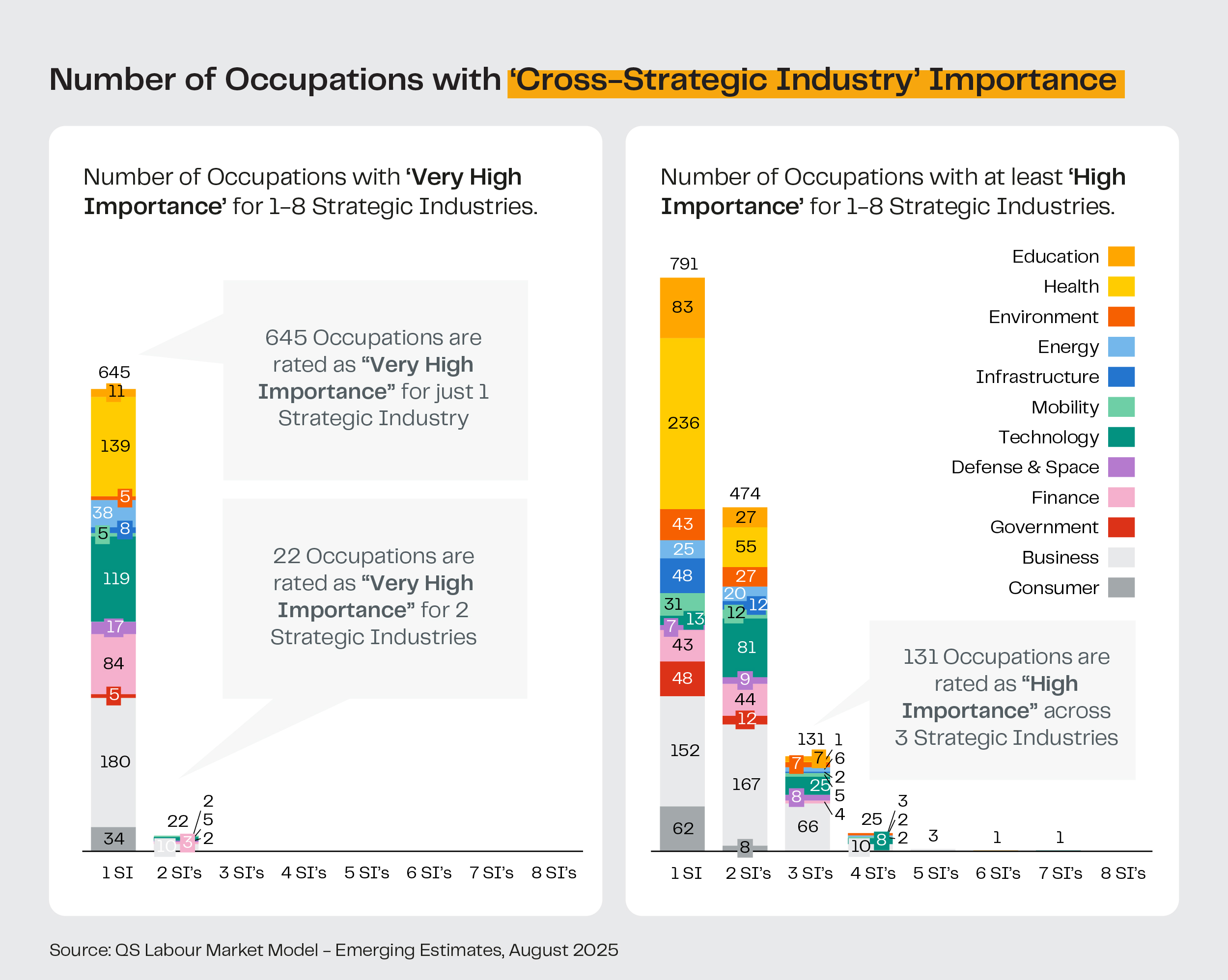
One of the most significant insights from the report is the importance of occupations that support multiple strategic industries simultaneously. While 645 occupations are rated as of very high importance to a single sector, a further 674 “transectoral” occupations are of high or very high importance across two or more sectors. These roles act as connective tissue across the economy, enabling innovation and productivity across multiple industries.
The chart below shows how many occupations are important across one or more strategic sectors, highlighting the significant number of roles that contribute to multiple industries at once.
Looking more closely at these cross-sector roles, the table below ranks the top 20 transectoral occupations from the UK’s full taxonomy of 1,890 roles, based on their importance across the eight Industrial Strategy sectors.
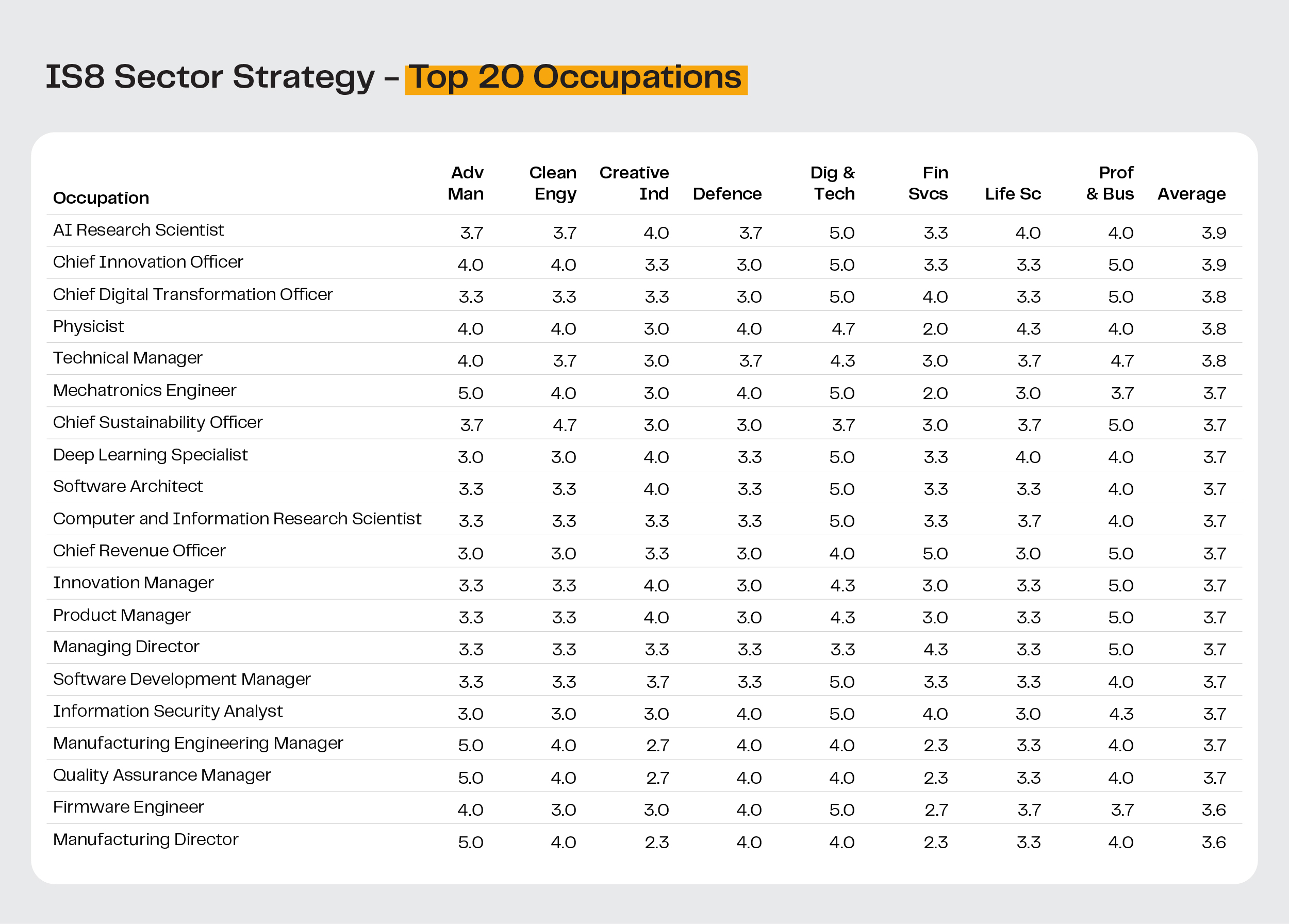
Because these roles support multiple sectors simultaneously, shortages could create constraints across the industrial strategy as a whole. Strengthening the pipeline of talent in these areas therefore represents a particularly high-impact investment for policymakers and education providers.
The findings reinforce the central role of higher education in supporting the UK’s long-term economic ambitions.
Three trends stand out:
Fields such as artificial intelligence, computational science and energy systems are becoming central to industrial growth.
Many high-demand roles combine technical knowledge with business, data or policy capabilities.
As strategic industries expand, ensuring a sufficient pipeline of graduates with the right skills will be essential.
More than 80% of occupations critical to the Industrial Strategy require degree-level qualifications, making higher education a key part of the UK’s economic infrastructure.
Ultimately, the success of the Industrial Strategy will depend not only on technology and investment, but on the skilled workforce capable of driving innovation across these priority sectors.