.jpeg)


From potential to progress: What will define African higher education's next decade?
.png)
17 July 2026


For years, discussions about African higher education have centred on potential. The continent's youthful population, growing economies and expanding university systems have long been presented as the foundations of future growth. Yet, as demand for higher education accelerates, a different question is beginning to emerge: how can that potential be converted into measurable outcomes?
Across discussions on skills, AI, employability, sustainability, leadership and mobility at the QS Africa Forum 2026, it became clear that future success will depend less on recognising opportunity and more on building the systems, partnerships and institutional capacity to deliver it.
Africa has increased its representation in the QS World University Rankings from 32 institutions in 2023 to 48 in 2027, reflecting the growing international visibility of the continent's higher education sector.
Africa's demographic advantage presents one of higher education's greatest opportunities – but only if institutions can respond at scale. Throughout the Forum, speakers highlighted projections that by 2050, one in four people globally will be African, with 850 million young people driving unprecedented demand for tertiary education. According to Global Student Flows: Africa, the continent's 18–25 population is expected to grow by around 3% annually until 2030, the fastest growth rate of any region globally, further intensifying demand for higher education. This pressure is already evident in student mobility trends, with more than 800,000 African students studying abroad in 2024 and outbound mobility projected to exceed one million students by 2030. Yet, despite this demographic advantage, only 9% of young people currently participate in higher education, compared with a global average of around 40%. The African Union has set an ambition of increasing participation to 50% by 2063, making expanded access and institutional capacity critical priorities for the sector.

The scale of this opportunity is difficult to overstate. A rapidly growing youth population could become one of the world's greatest economic assets, driving innovation, entrepreneurship and long-term growth, but demographic change alone does not guarantee prosperity. Universities will face increasing pressure to expand access while maintaining quality, relevance and graduate outcomes.
As Dr Sergey Paramonov, QS Regional Partnerships Manager, observed, higher education's growing responsibility is "to support economic development and prepare the young generation for the future." The institutions that succeed will be those that can scale without diluting the student experience or academic standards.
Historically, institutional success has often been measured through enrolment growth. Increasingly, however, the definition is changing and attention is shifting towards graduate outcomes. Speakers at the Forum repeatedly highlighted the importance of industry engagement, future-focused skills and lifelong learning. Rankings data reinforced this discussion, showing that while Africa ranks third globally for graduate employment outcomes, behind only Northern Europe and North America, many institutions continue to receive comparatively lower employer recognition. The implication is that African universities are producing graduates who perform strongly in the workplace, but institutional reputation has yet to fully reflect those outcomes.
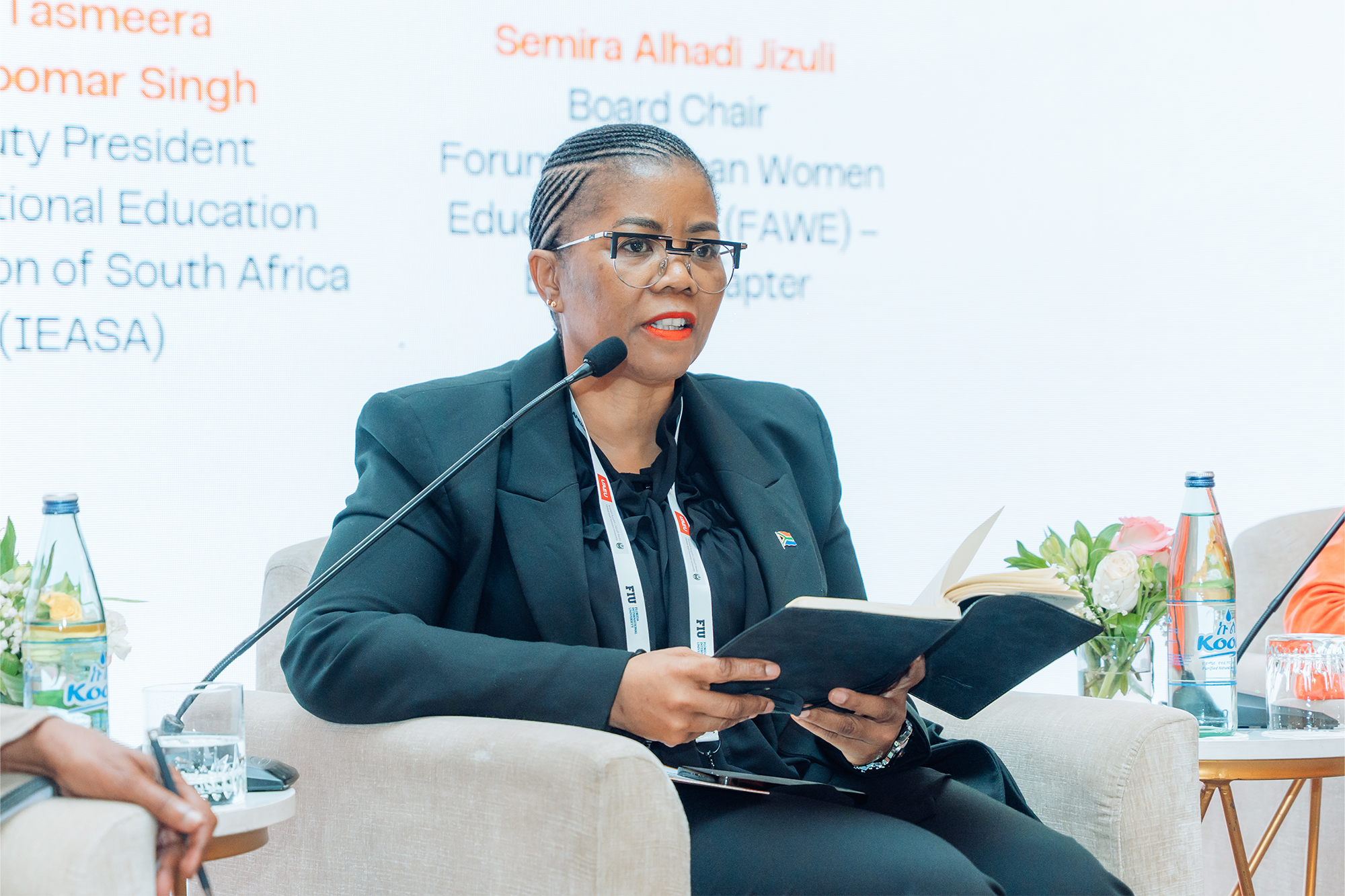
Universities will increasingly be judged on whether graduates possess the technical expertise, adaptability and entrepreneurial mindset needed to succeed in rapidly evolving labour markets.
While enthusiasm for AI was widespread, discussions throughout the Forum remained notably pragmatic. Speakers agreed that artificial intelligence is already transforming teaching, research and university operations, but many cautioned that uneven adoption could create a new form of institutional inequality. As Dr Kassim Abdi Jimale (Vice President, Research and Development of Jamhuriya University of Science and Technology) observed, higher education is moving beyond a traditional technology divide towards what may become "an AI divide".
Rather than viewing AI as a standalone technology initiative, participants consistently positioned it as a core institutional capability. Realising its benefits responsibly will require universities to invest in governance frameworks, faculty development, digital infrastructure and new approaches to assessment. Explore the QS AI Capability Assessments to assess, benchmark and strengthen your institution's AI capability.
Professor Kavi Kumar Khedo, Vice Chancellor of the University of Mauritius, argued that AI literacy should become a universal graduate skill. Regardless of discipline, he said, students will need to understand how to use AI ethically, critically and effectively in their future careers.
For universities, the implications extend well beyond operational efficiency. Institutions that invest in building AI capability today are likely to enhance their research competitiveness, strengthen student recruitment and improve graduate employability in the years ahead. As AI becomes increasingly embedded across society, the gap between institutions that adapt and those that lag behind is likely to widen.
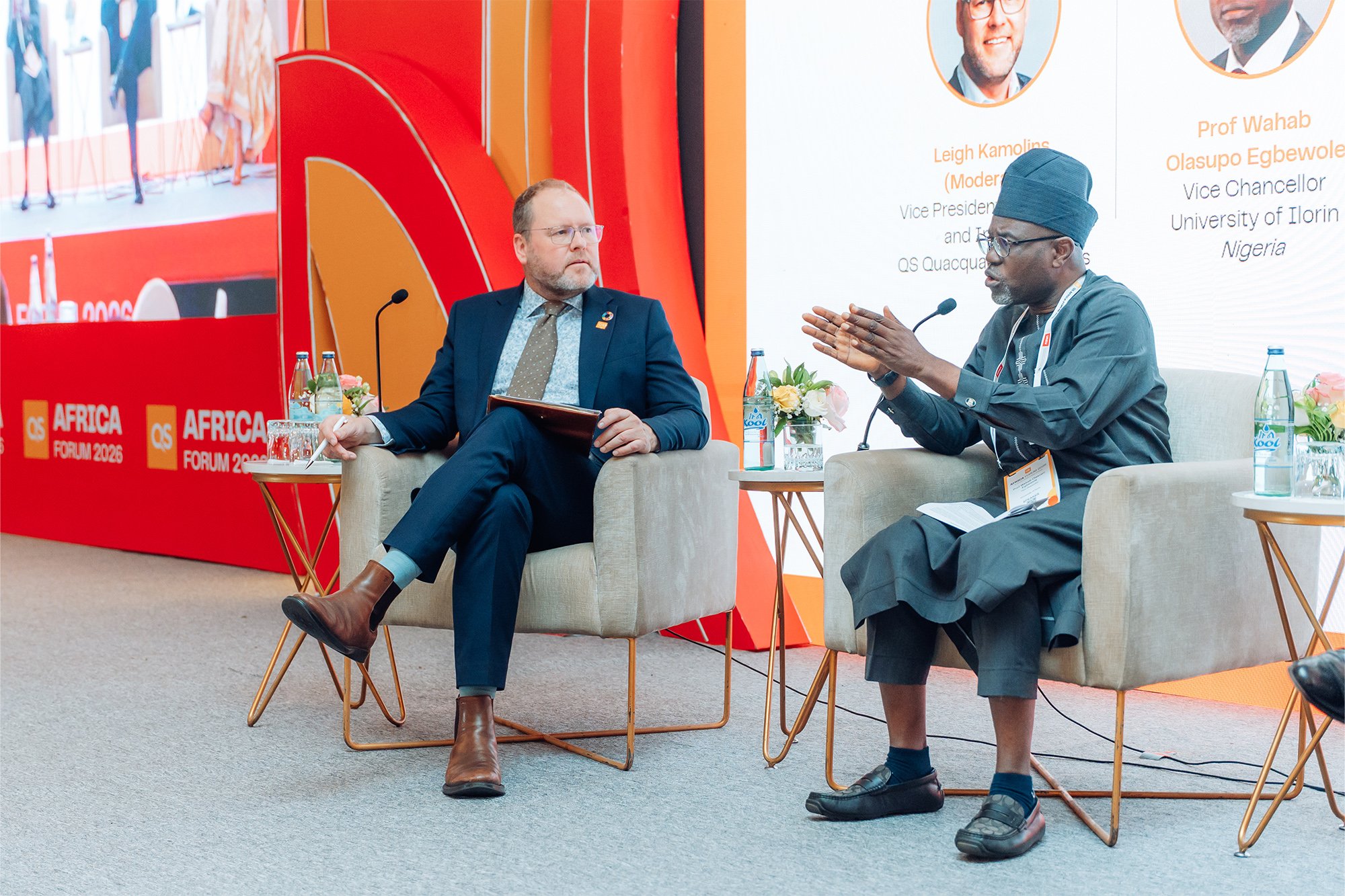
Partnerships featured prominently throughout the Forum, but discussions highlighted a significant shift in how international collaboration is being understood.
Rather than focusing primarily on student mobility or institutional prestige, speakers increasingly framed partnerships as strategic tools for building long-term institutional capability. Research collaboration, curriculum development, faculty exchange and leadership development were repeatedly identified as mechanisms for strengthening universities and higher education systems.
As Jonathan Foster-Pedley, Associate Pro-Vice Chancellor at the University of Reading and Dean of Henley Business School Africa, argued, the objective is no longer simply to move students across borders, but to "build local capability" through sustained, mutually beneficial partnerships.
Perhaps most strikingly, the conversation reflected a move away from traditional models of dependency towards one of co-creation. Successful partnerships were consistently characterised by mutual value, shared ownership and long-term commitment, with African institutions increasingly taking the lead in shaping priorities, defining outcomes and driving innovation. As a result, collaboration is becoming less about knowledge transfer and more about jointly building the capacity needed to address shared challenges and opportunities.
For many African universities, the real competitive advantage of the future may be greater visibility rather than improved performance. As institutions strengthen graduate outcomes, expand research capacity and deepen international collaboration, reputation is becoming an increasingly important asset in attracting talent, securing partnerships and drawing investment.
A recurring challenge for African universities is the gap between institutional performance and global perception. Despite growing achievements in research, teaching and graduate employability, international recognition has not always kept pace. This trend was reflected across discussions on rankings, employability and research at the QS Africa Forum 2026. At the same time, there are clear signs of progress: the number of African universities represented in the QS World University Rankings increased from 32 in 2023 to 48 in 2027, signalling growing international visibility and highlighting the opportunity to build even stronger global reputations.
The challenge, therefore, is not simply one of performance but of positioning. Delivering impact is essential, but universities must also be able to communicate that impact effectively to external audiences. In an environment where reputation influences everything from student choice to research funding and partnership opportunities, visibility has become a strategic priority rather than a marketing consideration.
Institutions that can clearly articulate their strengths to employers, policymakers and international partners will be better placed to shape global perceptions, attract new collaborations and enhance their international standing. As competition for talent, investment and influence intensifies, those that successfully align reputation with performance are likely to gain a significant advantage.
The next decade is unlikely to be defined by new ideas. The priorities for African higher education are becoming increasingly clear: stronger employer engagement, greater institutional agility, deeper partnerships, responsible AI adoption and sustainable approaches to growth.
Across discussions on skills, leadership, mobility and institutional transformation, speakers at the QS Africa Forum 2026 repeatedly emphasised that Africa does not lack vision or ambition. Instead, the challenge lies in creating the systems and sustaining the action needed to turn both into tangible outcomes.