
.jpeg)


EdTech Ecosystem Hubs | Catalysing Innovation Across Education Systems

7 May 2026


EdTech Ecosystem Hubs (ETE Hubs) have become an established layer of infrastructure within education innovation systems. Over the past decade, ETE Hubs have played a connective role across key stakeholders - startup founders, universities, schools, employers, funders, and governments - helping translate emerging technologies, tools and solutions into applied pilots, partnerships, and pathways toward adoption. While their structures and mandates vary across regions, their function is consistent: aligning innovation with the realities and needs of education systems, including teachers and learners.
As the global EdTech market has expanded across early learning, K–12, post-secondary, and workforce training and development, so too has ecosystem complexity. ETE Hubs face mounting pressure to contribute to system-level outcomes while often operating without corresponding system level funding, authority, or long-term institutional support. Across the world, ETE Hub leaders emphasized that the constraint is less about the availability of innovation and more about coordination, sustainability, and alignment across complex education ecosystems.
This report draws on direct engagement with EdTech Ecosystem Hub leaders across geographies and operating models to examine how ETE Hubs function, how they adapt to local conditions, and where structural constraints continue to shape their impact. By synthesizing shared patterns across diverse contexts, the report provides a global perspective on ecosystem-level challenges, operational trade-offs, and conditions associated with sustainable and effective ETE Hub activity.
Read an extract below, or download the full report.
EdTech Ecosystem Hubs operate under diverse structural configurations shaped by funding conditions, institutional anchoring, and ecosystem maturity. While ETE Hubs are often described by activities the do, (accelerators, incubators, associations, research) these labels can obscure deeper and more complex structural differences that influence sustainability, governance, and system-level impact.
Two dimensions consistently shaped how Hubs function:
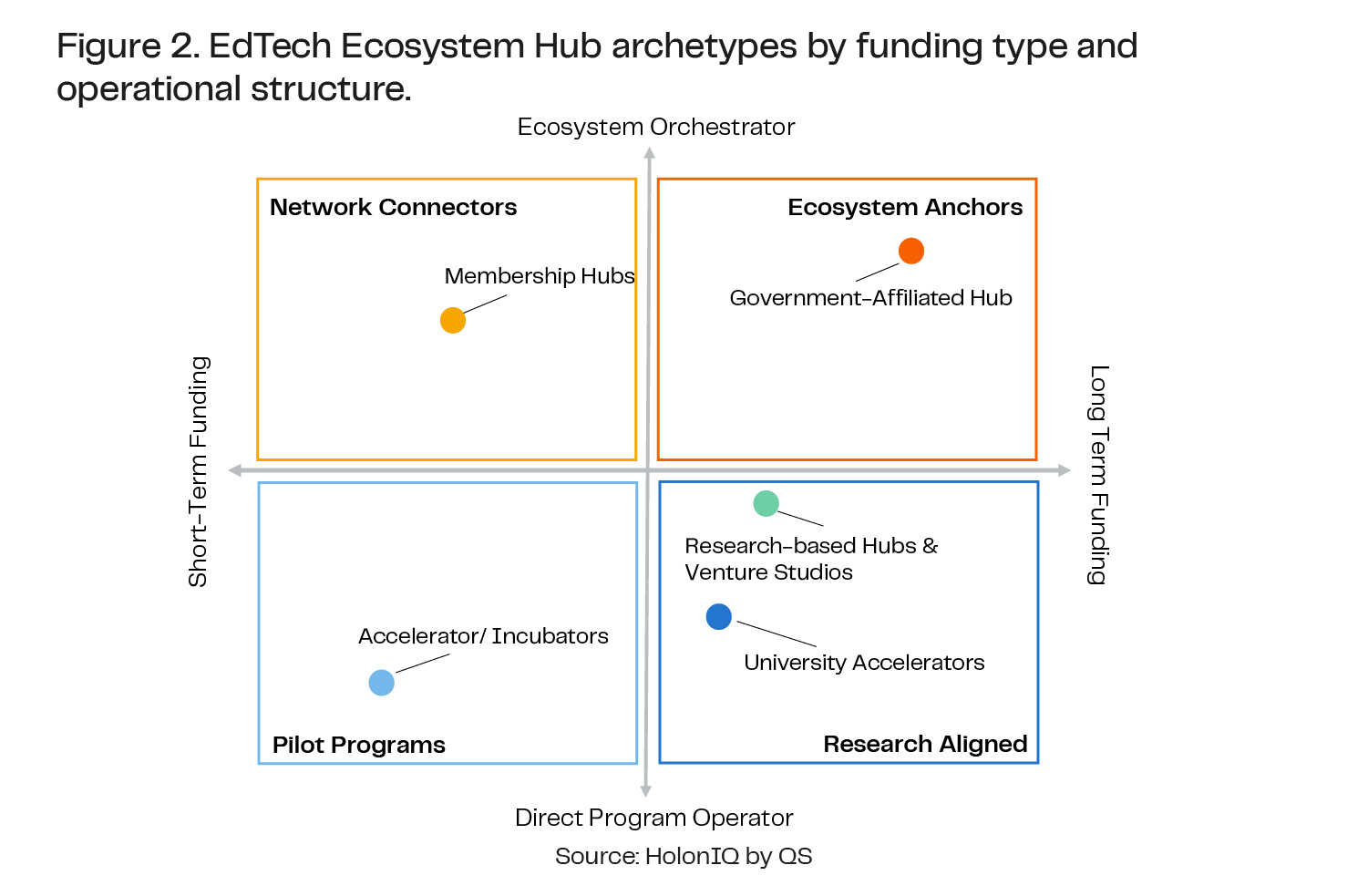
Together, these dimensions reveal four dominant ETE Hub Archetypes. These should be understood as operating logics rather than rigid categories; most ETE Hubs blend characteristics and shift over time as funding environments and stakeholder relationships evolve. Figure 2 situates the four archetypes across funding stability and operating structure.
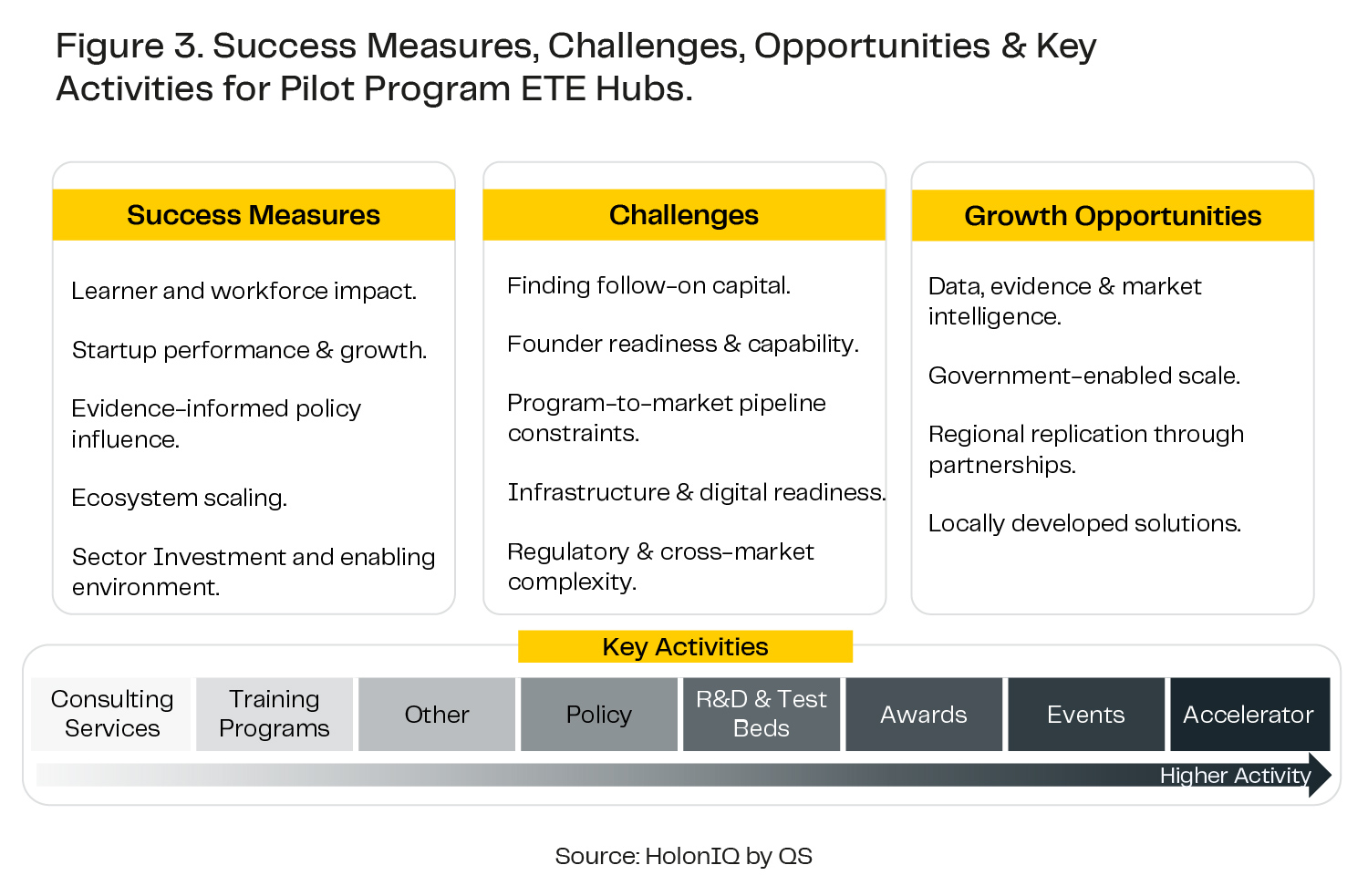
Pilot Program ETE Hubs are typically accelerator- or incubator-led and center on structured, time-bound cohorts supporting early-stage EdTech startup founders. Their activities emphasize mentorship, piloting, product development support, and access to investors and partners. Their primary ecosystem contribution lies in founder development, experimentation, and early stage pipeline creation.
These models appear to be effective in enabling rapid learning cycles and testing innovation. However, sustainability remains a recurring challenge, as operations often depend on grants, philanthropic funding, or program-specific sponsorships. While many layer in broader ecosystem activities, their structural centre of gravity remains cohort based delivery.
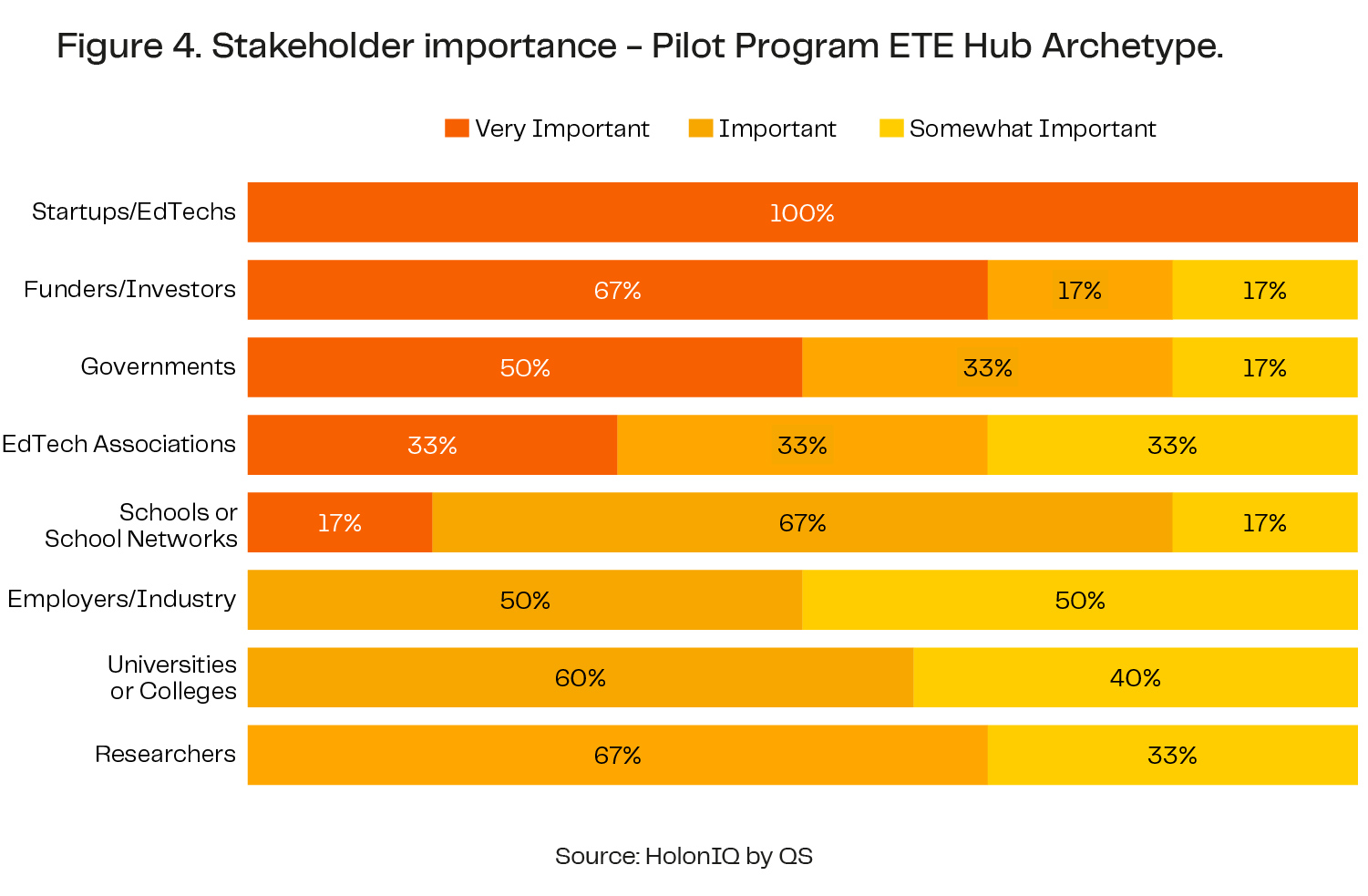
Pilot Program Hubs overwhelmingly identify startups and EdTech companies as their most important stakeholders, with 100% rating them as “very important” as seen in Figure 4. Funders and investors also rank highly, reflecting the central role of capital access in early-stage founder support.
Governments and schools are important partners, particularly for piloting and validation, but the focus remains on building and accelerating startup pipelines. This reinforces the cohort-based, founder-centric logic that defines this archetype.
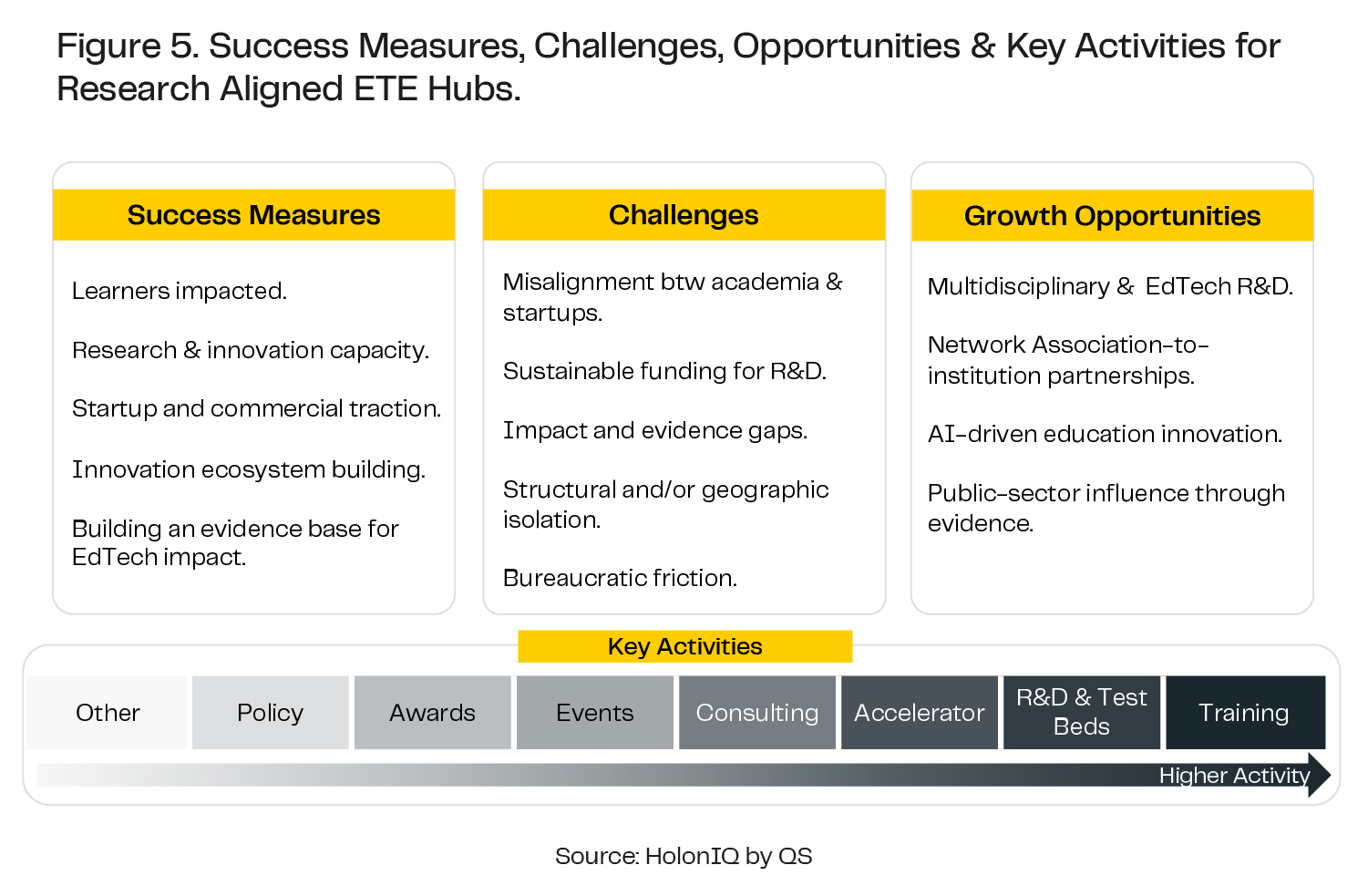
Research-Aligned ETE Hubs are typically embedded within universities or education institutions and often combine accelerator or incubator programming with applied research and institutional partnerships. Many run structured cohorts similar to Pilot Program models. However, their distinguishing feature is structural anchoring within a university or other research-based environment. This positioning often provides access to researchers, students, piloting environments, and institutional infrastructure that shape how innovation is developed and tested.
This model emphasizes a proximity to research and education systems, enabling pathways from evidence generation to commercialization and real-world implementation. While these Hubs may support early-stage founders, their reach extends beyond cohort delivery to include any combination of research translation, workforce development, and long-term institutional collaboration. Governance, and funding structures and university mandates can influence pace and flexibility, but they also contribute to durability and ecosystem legitimacy.
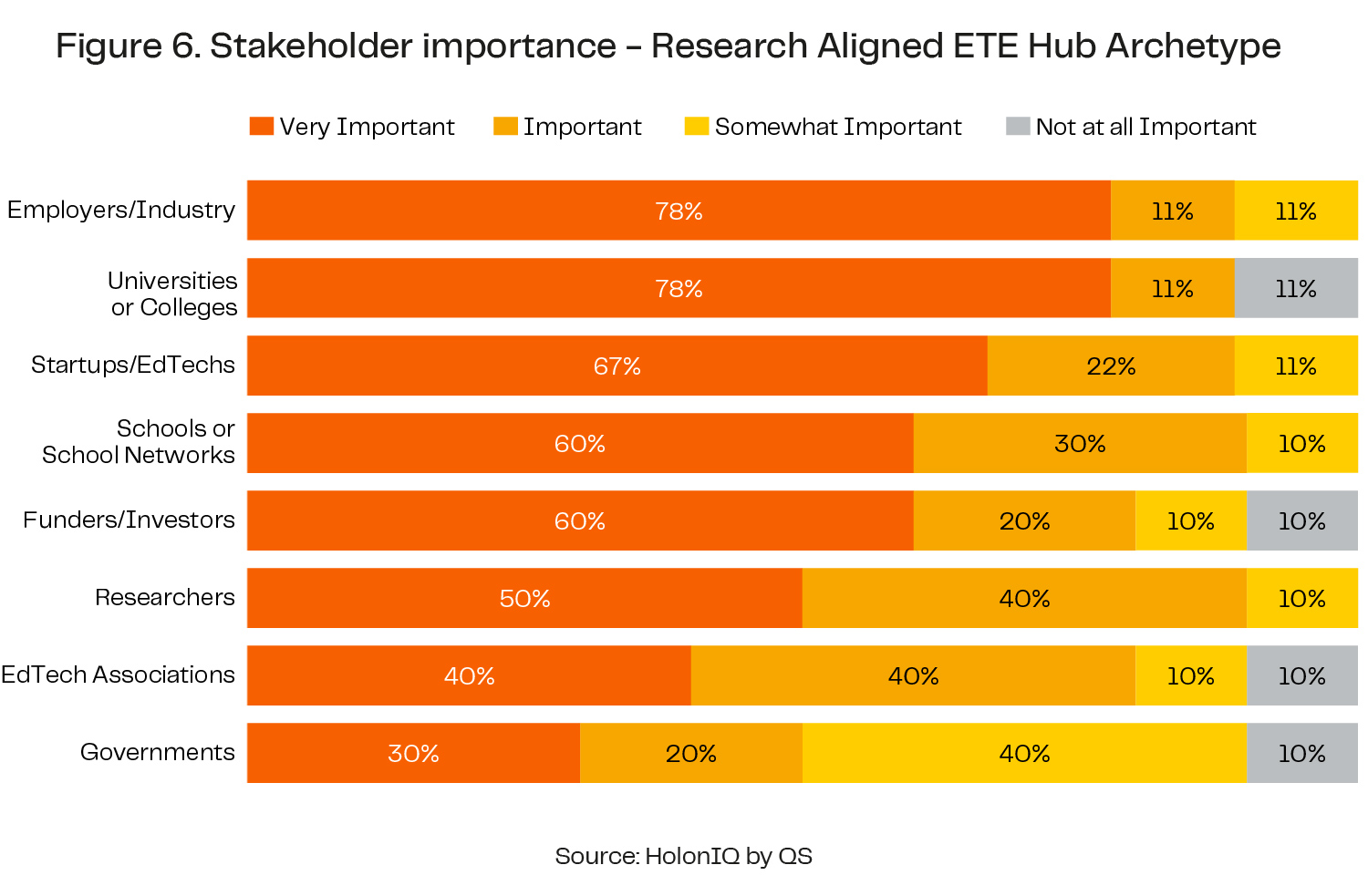
Research-Aligned ETE Hubs place highest importance on employers/industry and universities, with 78% rating both as “very important” as seen in Figure 6. EdTech startups and schools also rank highly, reflecting their role in bridging research, institutional infrastructure, and real-world application. Researchers themselves are important, though slightly less dominant than institutional partners. Compared to the Pilot Programs Archetype, this model is less founder-centric and more structurally oriented around institutional collaboration and workforce alignment.
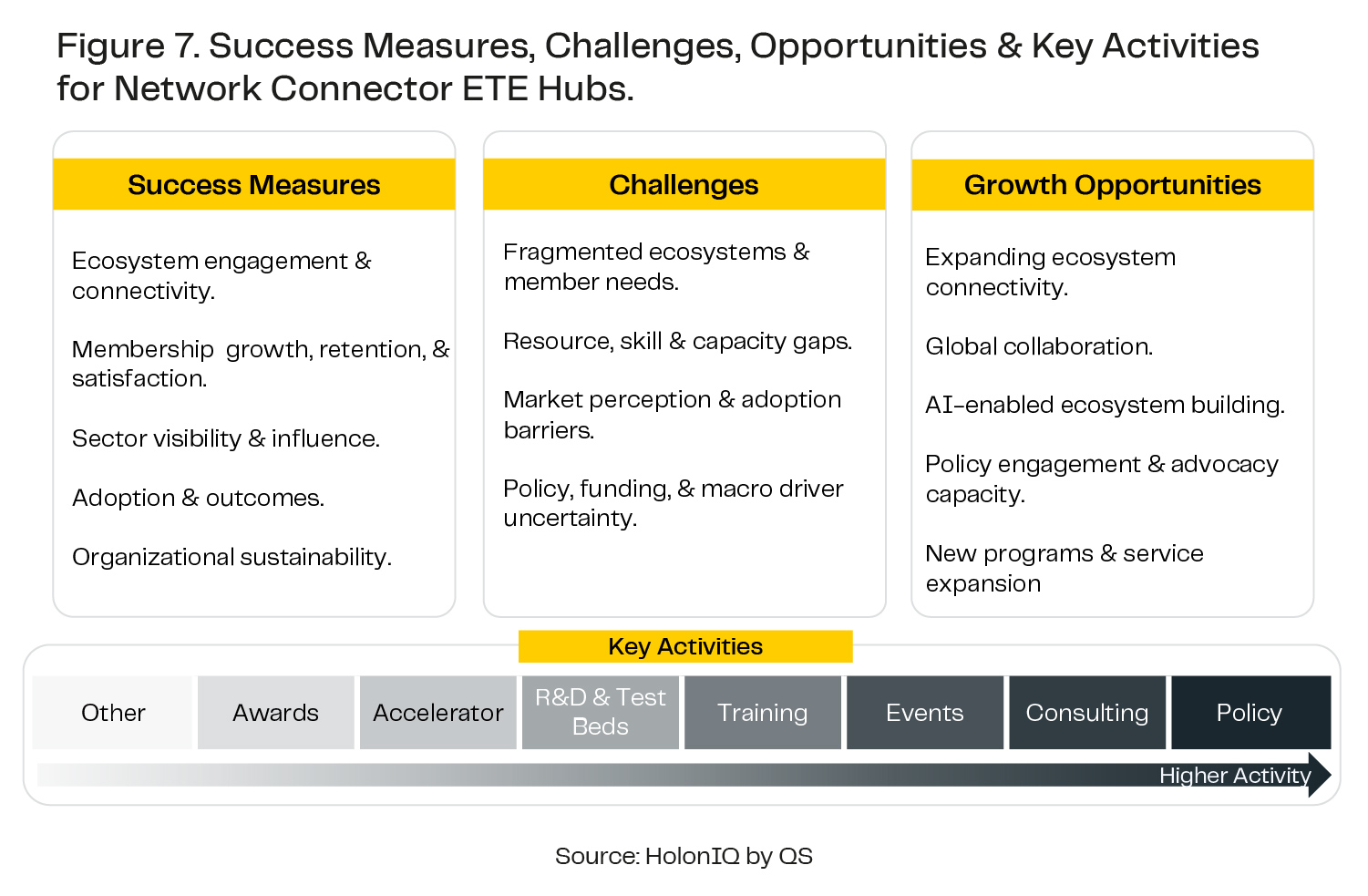
Network Connector ETE Hubs are typically membership-based Hubs focused on convening, knowledge exchange, brokerage, and ecosystem visibility. They act as connectors across EdTech startup founders, educators, policymakers, funders, and industry partners, exercising influence primarily through coordination and working to align or affect policy. While some offer consulting services or host events, these activities generally support their broader role as ecosystem intermediaries rather than defining their core structure. These models are particularly valuable in fragmented ecosystems where coordination gaps are pronounced. However, financial sustainability is closely tied to membership engagement, sponsorships, and project-based funding, creating exposure to fluctuations in participation and sponsor priorities.
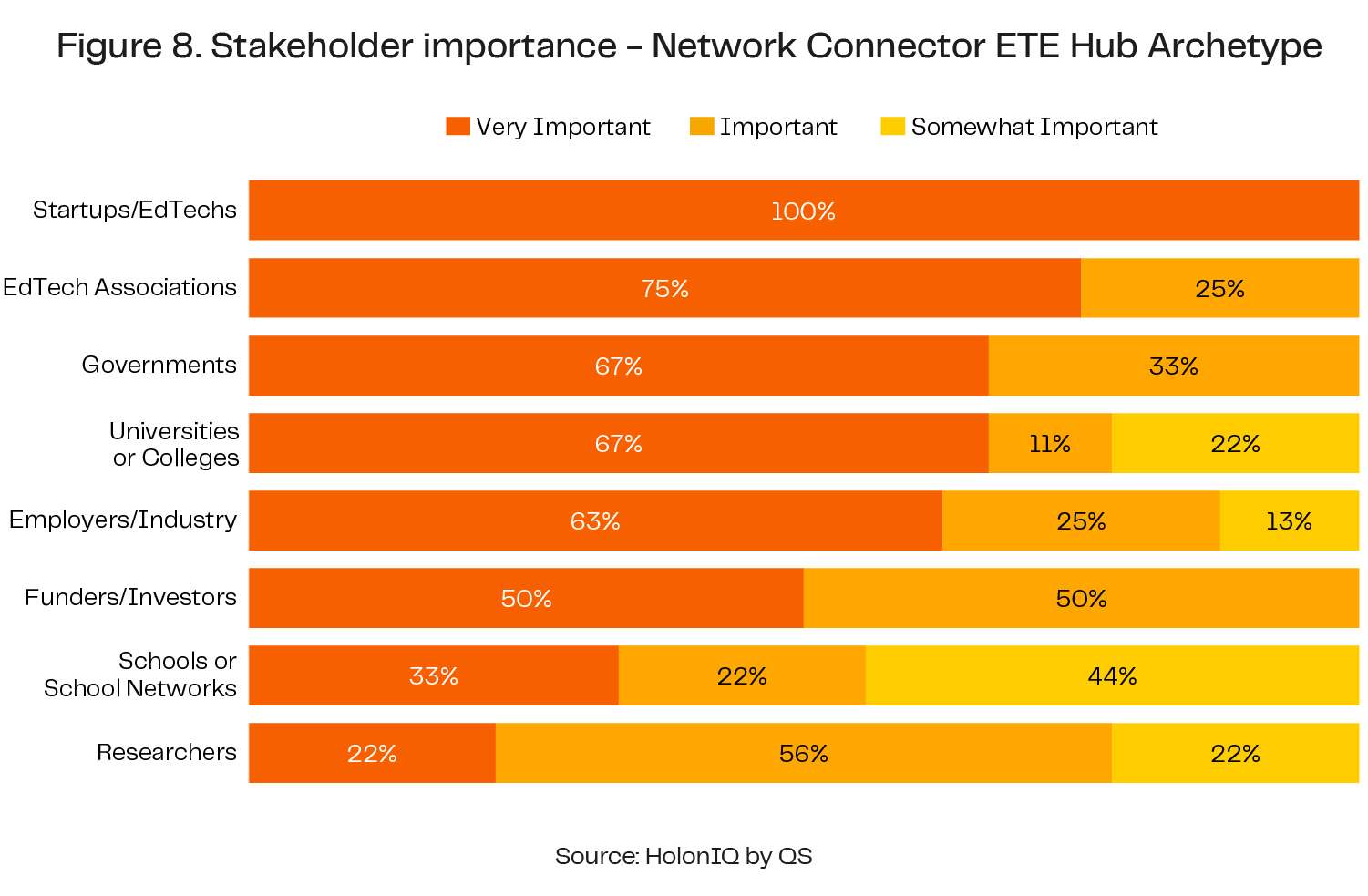
Network Connector ETE Hubs place startups and EdTech companies at the centre, with 100% rating them as “very important,” as seen in Figure 8, but their stakeholder emphasis is broader than founder support alone. EdTech associations, governments, universities, and employers all rank highly, reflecting a coordination-driven model that spans policy, industry, and institutional actors. Funders are important, though less dominant than in the Pilot Program Archetype, while schools and researchers tend to be secondary partners. The pattern reinforces their role as ecosystem intermediaries rather than program operators.
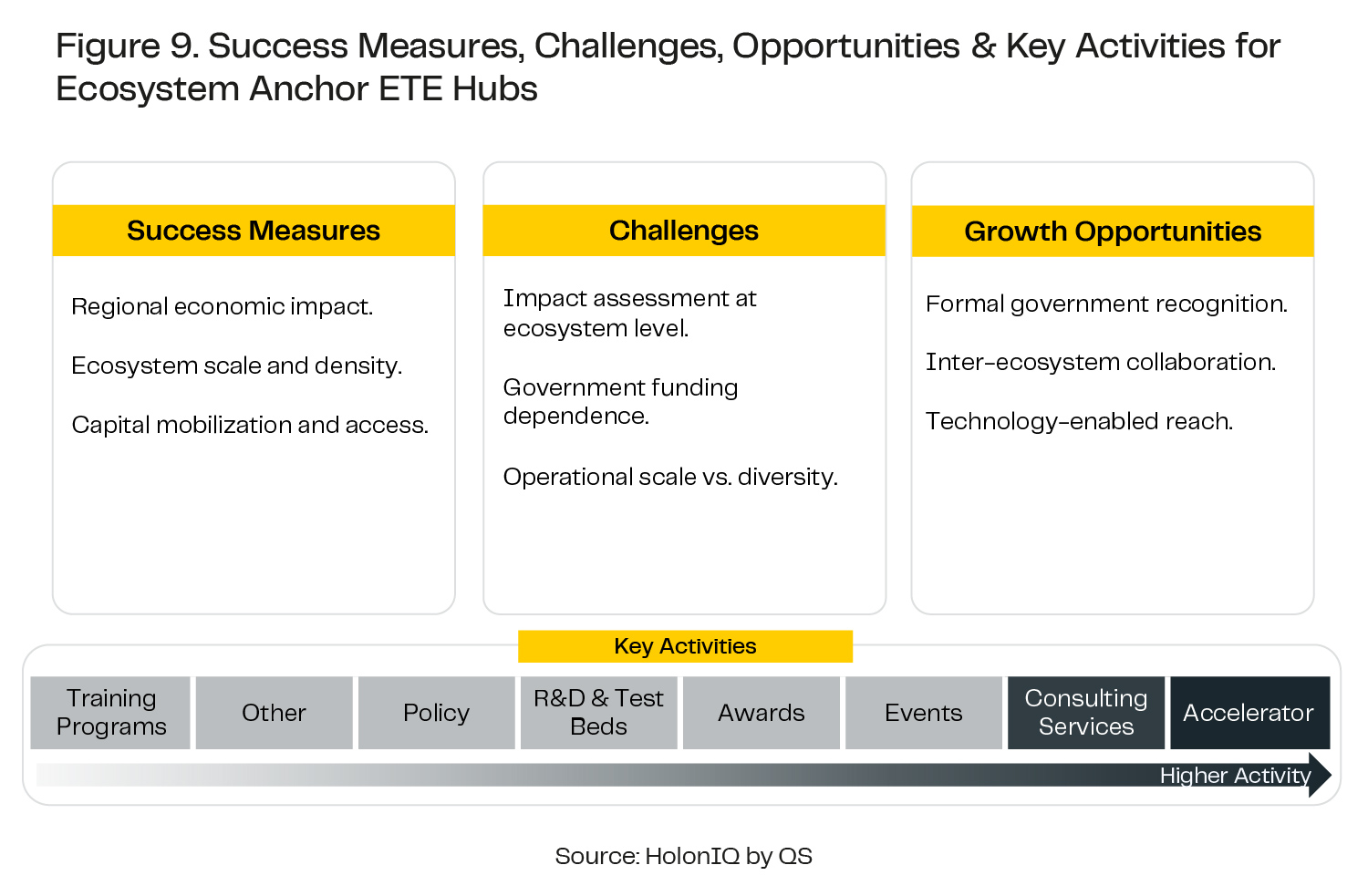
Ecosystem Anchor ETE Hubs are aligned with or supported by public entities and embedded within local or regional education strategies. Rather than influencing policy from the outside, they often emerge as a result of policy priorities and public investment frameworks, operating within defined strategic mandates. They link innovation pipelines with procurement pathways, adoption environments, and system-level infrastructure, extending beyond individual programs to broader ecosystem coordination. Advantages associated with this structural alignment include clearer pathways into public systems and, in several cases, more stable funding arrangements. At the same time, procurement rules, political cycles, and institutional risk constraints can shape experimentation timelines and limit operational flexibility.
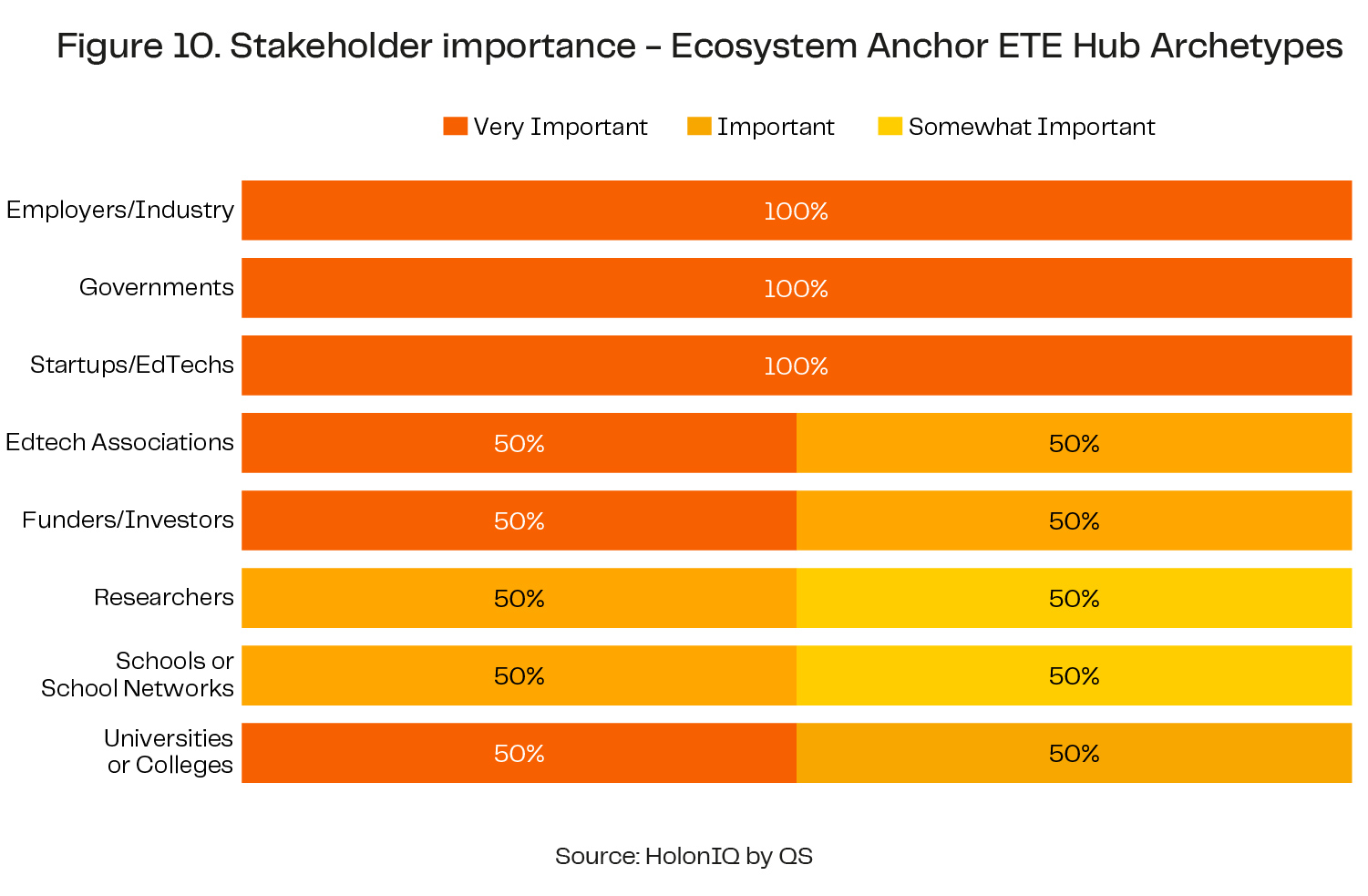
Ecosystem Anchor ETE Hubs identify employers/industry, governments, and startups as unanimously “very important,” reflecting their system-level mandate and alignment with public strategy and workforce priorities. Universities and funders also rank highly, while researchers and schools appear as important but less central actors. Although the sample size is small, the pattern suggests a structurally embedded model that operates across policy, industry, and innovation pipelines rather than centering on a single stakeholder group.
Across participating ETE Hubs, Pilot Program and Network Connector Archetypes appeared most frequently, reflecting how many ecosystems currently rely on program-led and membership-based structures. Research-Aligned and Ecosystem Anchor Archetypes were fewer, but typically more deeply embedded within institutions and longer-term strategies. The structural differences across the models shape funding stability, experimentation timelines, and system integration, and across the organizations, common pressures and success enablers emerge. Regardless of archetype, ETE Hubs are navigating sustainability constraints, coordinating diverse stakeholders, and demonstrating value within education and workforce systems. The following sections examine shared dynamics of where approaches diverge and lessons converge.








.webp)