
.jpeg)
US Higher Education at an Inflection Point: What We Learned at Back to School 2026

2 October 2026


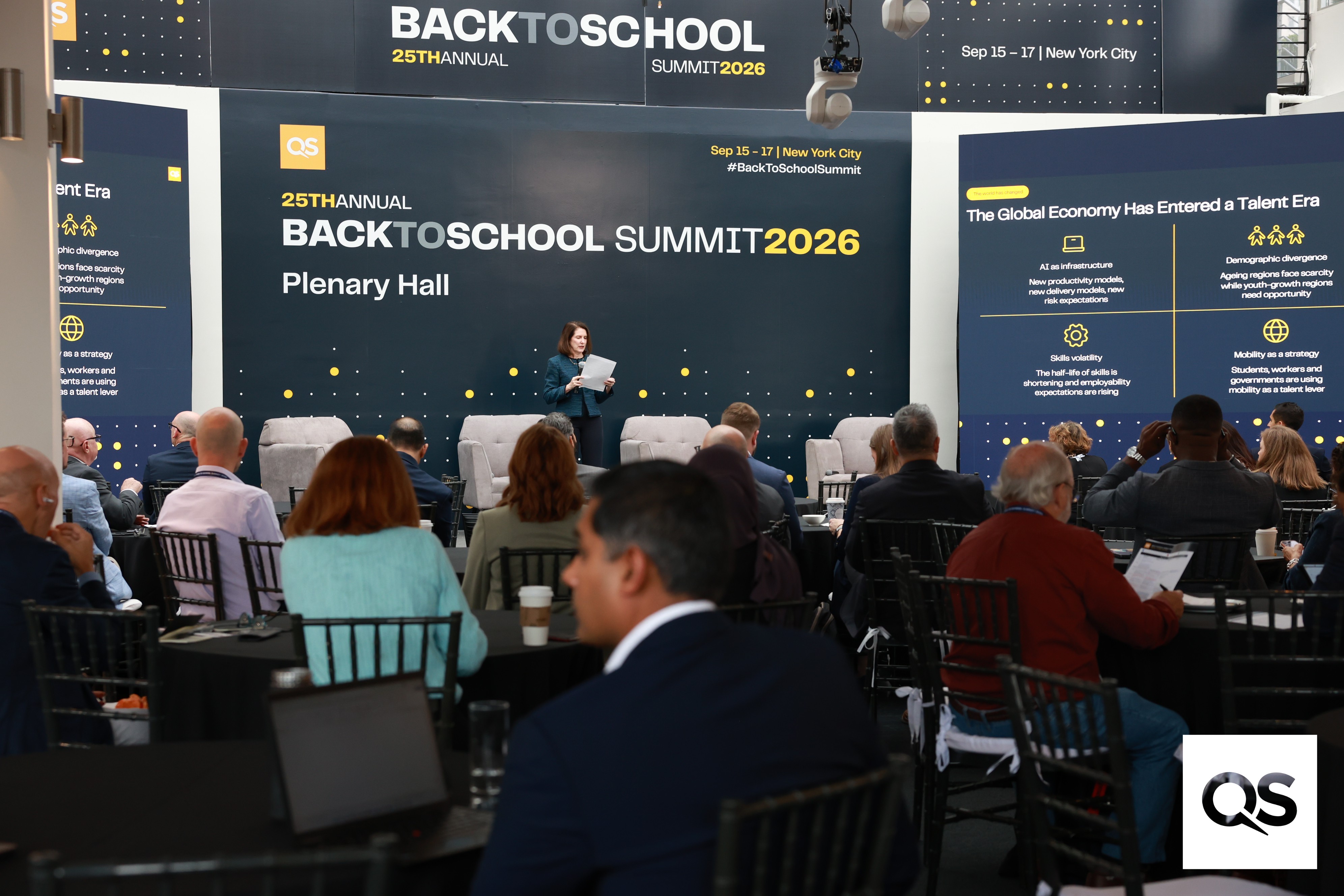
Demographic change is shifting where the world’s future talent will come from. AI is reshaping the skills economies need, while new centers of education, innovation and growth are challenging long-held assumptions about where opportunity lies. Opening the 25th Annual Back to School Summit in New York City, Ben Webb, QS Executive Director for QS, delivered his opening remarks, saying: "The status quo across all of the different lens we have in the room on education doesn't exist anymore." He described this as a chance to be a "new kind of trailblazer". QS CEO Jessica Turner further emphasized the need to adapt and be bold, saying: “The bar is getting higher. Our environment is so full of uncertainties and we need to find new frontiers.” The US continues to lead the QS World University Rankings by representation among the top 100, 500 and 1,000 institutions, yet QS data shows that the average performance of US institutions is declining relative to international peers over the past five years. The conclusion: Institutions that thrive in the years ahead will be those that understand where talent, skills and economic opportunity are moving, and move with them.
One of the most significant shifts is the changing geography of global talent. As Turner put it, “Some countries are running out of students, others are running out of opportunities for them.” Aging populations in parts of East Asia and Europe contrast sharply with growing youth populations in India, Pakistan, Indonesia and across Africa. South Asia is projected to account for more than 26% of the global workforce by 2050, with nearly 100,000 young people entering the workforce each day. Across Southeast Asia, post-secondary attainment is expected to double by 2060, while Africa is emerging as another major source of future talent. At the same time, international education is becoming more broadly distributed. The established 'big four' of US, UK, Australia and Canada remain major players, but new talent corridors are developing across South and Southeast Asia, Europe and East Asia, influenced by affordability, government policy, educational quality and post-study employment opportunities.
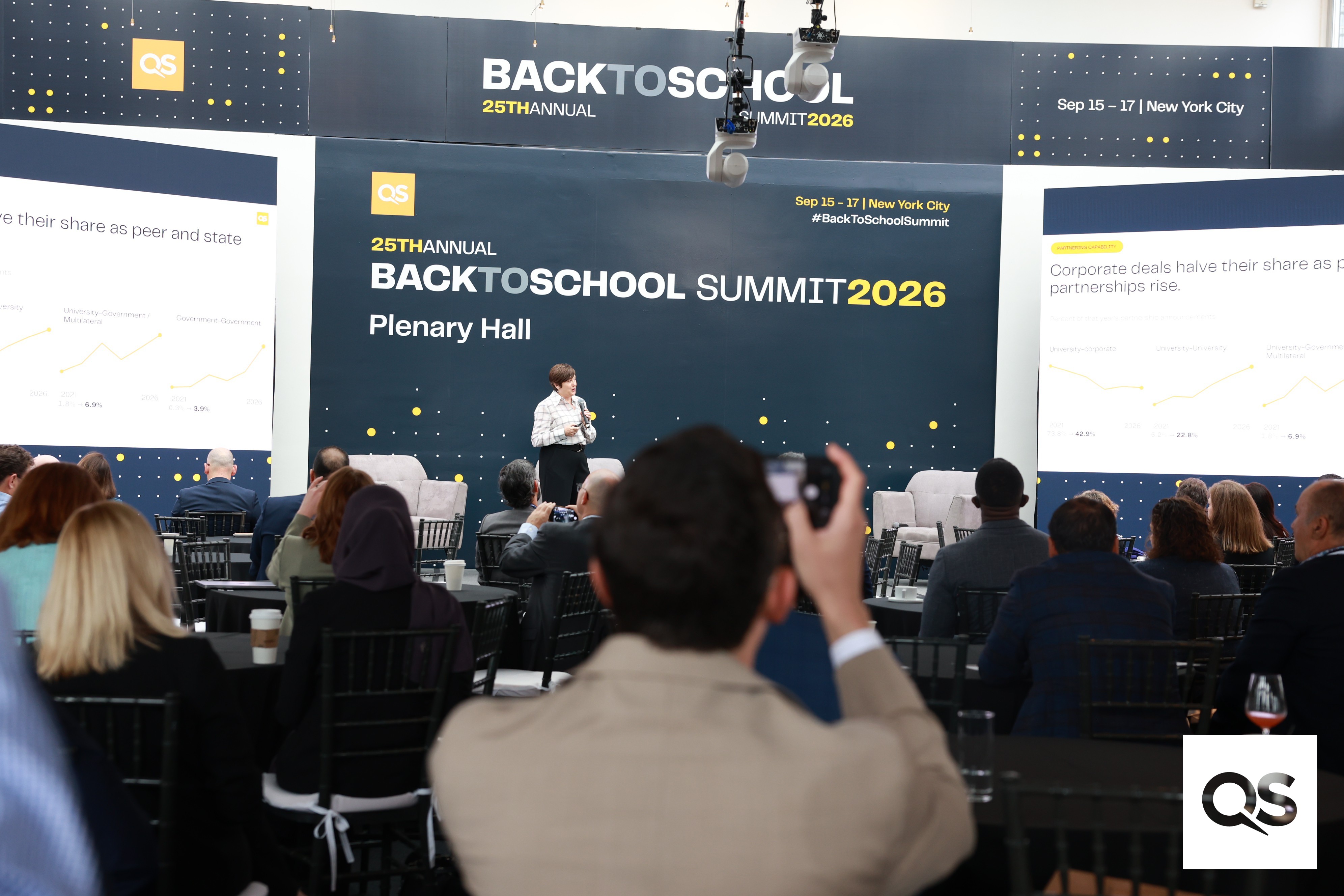
For the US, this shift is already visible in international student flows. Projections point to a 2% decline in international students by 2030, alongside growing opportunities in emerging source markets including Nepal, Vietnam and Ghana. The combined share of international students coming from the US’s two largest source markets, China and India, has already fallen from around 51% in 2023 to 47% in 2026. The relationship between education and employment is also becoming more explicit. Degrees remain important, but Turner argued that employers and learners increasingly want evidence of “what graduates can actually do.” The QS Global Employer Survey 2026 identifies problem solving as the largest global skills gap, with a score of 18.3, followed by communication at 17.1 and critical thinking at 17. These findings underline the continued importance of human capabilities even as AI becomes more embedded in the workplace. New infrastructure is emerging around skills intelligence and career navigation. The implications extend beyond curriculum design. “If institutions don’t occupy that space between education and employers, then other intermediaries will,” Turner said. Universities, therefore, have an opportunity to move beyond being providers of education toward becoming orchestrators connecting learning, skills, employers and opportunity.
AI has moved far beyond experimentation, placing greater emphasis on governance, workforce capability, data quality and ethics. Students are also asking universities for more practical preparation: QS data shows that 46% want training on using AI tools professionally and ethically, 35% want clearer institutional guidance on ethical AI use and 30% want an AI literacy course or module. Digital capability is becoming equally fundamental. More than half of US students now engage with online learning in some form, while almost half of postgraduate students study fully online. The takeaway from QS Chief Innovation Officer Dr Maria Spies was that institutions must increasingly consider how physical and digital delivery, AI and partnerships combine into a coherent institutional strategy. She emphasized the value of partnerships, and how no single institution is going to have the capabilities to succeed or thrive on their own.
Public universities are being asked to deliver on a broader mandate. Few systems illustrate the scale of that responsibility better than SUNY. With a location within 30 miles of every New Yorker, the system combines statewide access with significant economic and research capacity, producing more than 19,000 STEM graduates annually, supporting 590 industry partnerships and generating $1.5 billion in annual research expenditure. Across 64 institutions, it serves nearly 390,000 enrolled students and a further 1.2 million learners through online, continuing education and community outreach.
Affordability and access remain central to the mission of public education. Yet these are challenging times as institutions navigate shifting demographics, rapidly evolving workforce needs, AI disruption and growing scrutiny of the return on investment of a college degree. As the three Presidents from SUNY institutions gathered at the Back to School Summit made clear, the challenge is increasingly to combine the accessibility of a public system with greater flexibility, stronger connections to employment and continued excellence in teaching and research.
At Binghamton University, demand remains strong, with more than 60,000 applicants for an incoming class of approximately 3,300, while the institution is also enrolling more first-generation and Pell-eligible students. President Anne D’Alleva argued that institutions need to respond with a more holistic model. She explained: “Student success doesn’t start and end in the classroom.” That means considering students’ academic progress alongside their health, wellbeing, basic needs and professional development. It also means beginning career planning much earlier. “Career preparation doesn’t start the summer before senior year anymore,” she added.
FIT President Jason Schupbach distilled some of the criticism facing the sector into three concerns: “It’s too expensive, you have to go for too long, it’s not connected to industry.” FIT’s model offers one response, with one-, two- and four-year pathways, individual courses and adult learning alongside close connections to New York’s creative industries. Empire State University provides another. Its fully online model serves approximately 19,000 students ranging in age from 14 to 89, with extensive recognition of prior learning and transfer credit. President Dr Lisa Vollendorf argued that higher education needs “a diversity of institutions” capable of meeting learners where they are, adding: “Adaptability in education is not easy, and agility does not come naturally.”
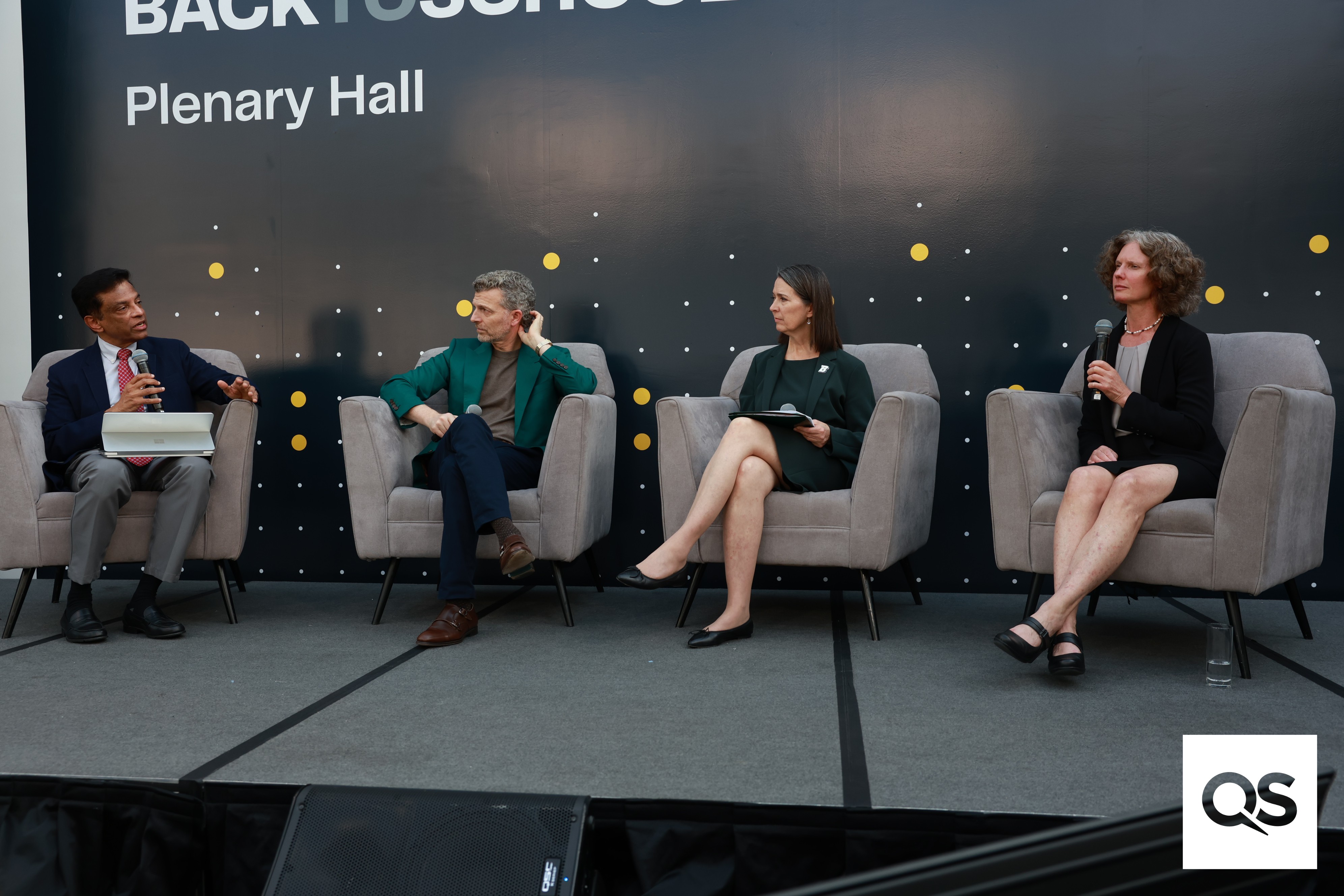
AI is adding urgency to that need for adaptation, particularly as technology changes the entry-level jobs that have traditionally provided graduates with their first step into a career. For Binghamton, the response is to ensure graduates are already building professional experience before they leave university. “Our students have to be ready. They can’t be entry-level actually when they leave,” D’Alleva said. Internships, co-ops, accelerated degree pathways and interdisciplinary AI projects are becoming part of that preparation. At Empire State, meanwhile, new certificates and partnerships with employers and unions are supporting continuous upskilling and reskilling, alongside a growing focus on privacy and responsible AI.
The discussion also highlighted why technological capability alone will not define graduate success. For FIT, creativity and adaptability remain critical as AI transforms the creative economy. “Creativity and the creative part of the human mind is the thing that future-proofs us against any technological innovation,” Schupbach said. His conclusion was equally direct: “Adaptability is the name of the game now.” This points to an increasingly important balance for universities: graduates need to understand how to use AI effectively, while retaining the judgement, imagination and disciplinary knowledge required to know when and how it should be used.
Public universities are also positioning themselves more explicitly as engines of economic and technological development. SUNY highlighted major investments spanning AI, semiconductor research and workforce pipelines, while Binghamton is establishing a New York Center for AI Responsibility and Research following a $30 million philanthropic gift and additional public support. FIT is applying research to sustainability challenges in the creative industries, including work on textiles made from agricultural waste. The common thread is a broader interpretation of the public mission: expanding opportunity while helping regions respond to technological, workforce and economic change. As Schupbach put it, public investment brings “a public responsibility to do something.”
Jeff Selingo, author of Dream School: Finding the College That’s Right for You, argues that the debate around declining confidence in higher education can obscure a more important reality: American families remain deeply invested in college. Across conversations in 24 cities and 12 states, alongside research involving more than 3,000 parents, Selingo found that higher education remains closely connected to families’ aspirations for their children. “Everybody wanted to talk about college,” he said. “This idea of what’s next after high school is still in the air. It’s still part of the American dream.” What has changed is the scrutiny applied to the investment, particularly around affordability, outcomes, student support and economic security.
Affordability is accelerating that shift. Selingo describes a growing category of “skip-over schools”: institutions that families might once have considered but whose price they are increasingly unwilling to pay. Crucially, this extends to families with the financial capacity to meet higher tuition costs. “It’s not because parents can’t pay it necessarily,” Selingo said. “They don’t want to pay it.” The result is stronger demand for public options, greater pressure on private institutions to discount tuition and a changing relationship between price and prestige. Asked whether this represents a temporary correction, Selingo was clear: “I think it’s a permanent reset.”
That reset is playing out unevenly across the sector. Selingo points to an increasingly polarized US higher education market, with some large public universities continuing to attract demand while many regional public and private institutions face enrollment and resource pressures. This is particularly significant because higher education remains far more local than its national profile suggests. More than half of students attending four-year institutions study within 75 miles of home, according to data cited by Selingo. “Higher ed is mostly a regional and local market,” he said. Demographic change therefore has very different implications depending on where an institution sits, whom it serves and how far its brand can travel.

The opportunity is to rethink how value itself is delivered. Selingo argues that universities too often conflate their mission with the traditional methods through which that mission has historically been delivered. “We want to be true to our mission, but we keep confusing our mission with the method of education,” he said, pointing to assumptions around residential study, 120-credit degrees and discipline-based majors. With technology and labor markets changing rapidly, committing to a four-year journey without clear visibility of what lies at the other end is becoming increasingly difficult for families. Skills-based courses, stackable learning and more modular pathways could give learners value at multiple points while creating clearer connections between education, employment and continued progression.
There is also a significant growth opportunity beyond the traditional 18-year-old undergraduate. Selingo highlights adults seeking to reskill, mid-career professionals responding to AI-driven workforce change, students combining high school and college through dual enrollment, and the millions of Americans with some college education but no recognized credential. “There’s more people around the world that need further education than ever before,” he said. Yet much of that demand is being met elsewhere, including through employers and platforms such as YouTube. For universities, the strategic opportunity is to design around distinct learner needs rather than expecting new populations to fit established models.
The constraint, Selingo suggests, is often institutional rather than market-driven. Academic programs can still be developed within disciplinary structures before questions of learner demand, employment needs or market positioning enter the conversation. Institutions may talk about innovation while governance, incentives and established ways of working make substantive change difficult. The implication for university leaders is significant. Families have not abandoned higher education, but they are asking harder questions about what they receive in return. As Selingo’s analysis suggests, institutions that can translate their enduring mission into more flexible models, clearer credentials and demonstrable value throughout the learner journey will be better positioned for this new era of US higher education.
Universities have invested heavily in digital platforms, student services and new learning models. Yet for many learners, the experience remains fragmented, complex and difficult to navigate. The challenge now is to redesign the institution around the learner rather than expecting the learner to navigate the institution. Leaders from UMGC and Marshall University argued that this requires more than new technology. It means rethinking organisational structures, breaking down silos and connecting the learner experience more directly to workforce outcomes. Dr Besendorfer captured the ambition through a simple analogy: “It doesn’t matter where I land in the world an iPhone still works like an iPhone.” Higher education should aspire to an experience that is just as seamless, intuitive and consistent.
That requires looking at the university through the learner’s eyes. UMGC used interviews to observe how students actually navigate its systems, from the number of clicks required to find information to how long it takes to receive an answer. What emerged was a gap between the experience institutions believe they provide and the one students actually encounter. University technology can become, in the panel’s words, “Frankenstein together,” as individual systems are added over time without creating a coherent whole. Human-centered design is therefore becoming a strategic capability, helping institutions remove friction and make services more intuitive, responsive and connected.
The same learner-centered thinking is changing how universities approach employability. At Marshall University, programs are increasingly aligned with the economic needs of West Virginia, including advanced manufacturing, energy, healthcare and cybersecurity. Rather than assuming what employers require, the university conducts “deep customer empathy interviews” to understand where skills gaps are emerging and where university expertise can help. That approach has already supported apprenticeship programs that are being extended into 36 other states. The principle is straightforward: “really just paying attention and listening to the businesses that are right in our backyard” and partnering with them to solve persistent workforce needs.
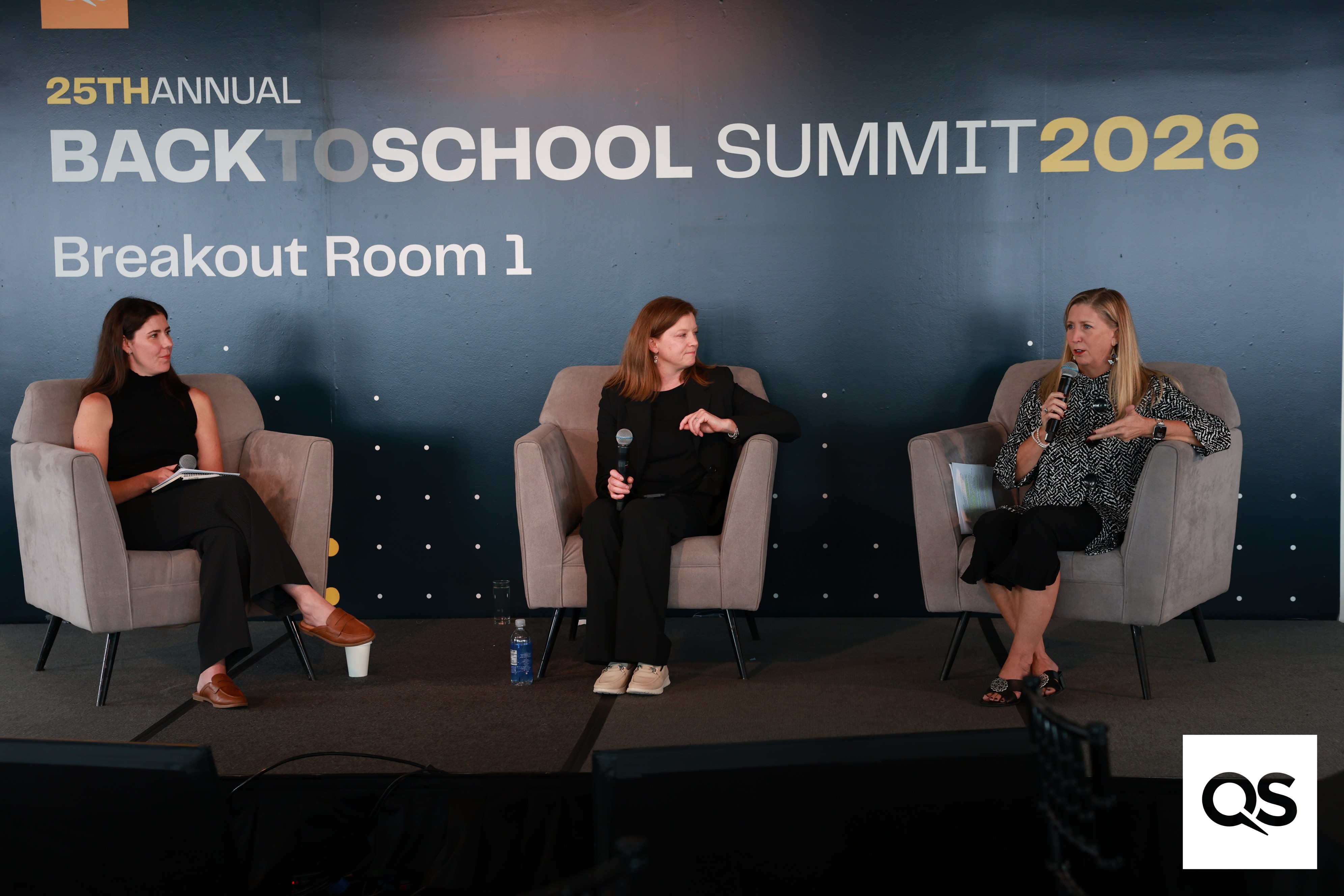
Access, however, depends on more than creating the right program. For learners with little previous connection to higher education, a difficult enrollment process can itself become a barrier. “You get one shot at that person coming into your ecosystem,” the panel heard. If registration is confusing or the experience breaks down, “they’re not coming back to us.” This puts operational design firmly within the access and student-success agenda: simplifying the front end of higher education can be just as important as developing new courses, credentials or pathways.
AI adds another dimension to this redesign. UMGC is developing a human capability framework focused on the durable skills learners will need to work effectively with both people and AI. Its general education curriculum is being rethought around these capabilities, with the intention of providing students with a credential demonstrating their readiness for the AI era. The distinction is important: the goal is to move beyond “teaching people to use AI” toward “teaching people to partner with AI.” Critical thinking, communication and effective questioning therefore become more important as AI is integrated into learning rather than displaced by it.
Ultimately, the discussion pointed to a different model of university leadership. Future leaders will need to challenge inherited structures while protecting academic rigor and standards. “We have to get rid of the way we’ve always done it because we’re not living in a world that is like we’ve always had,” Dr Besendorfer argued. The objective is a university capable of understanding learners well enough to anticipate and respond to their needs: “They knew exactly what I needed when I needed it.” Achieving that will require institutions to combine personalization and AI with strong ethical judgment, collaboration and a clearer understanding of whom their systems are designed to serve.