

.jpeg)


Rethinking student success: What health and wellbeing data reveals about the future of international education
2 April 2026


International education is often measured through enrolments, rankings and graduate outcomes. Yet beneath these headline indicators lies a more complex reality: student success is deeply shaped by everyday lived experience.
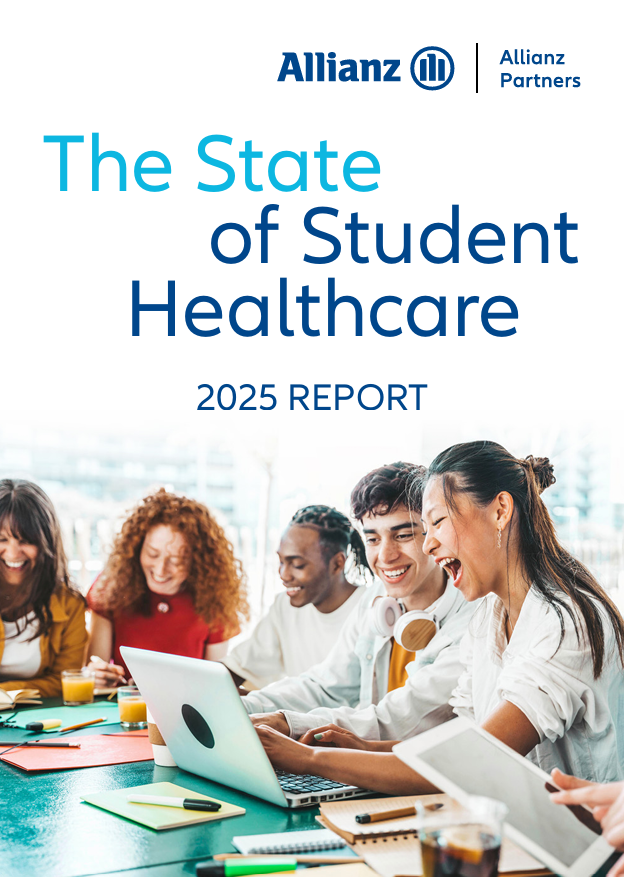
The 2025 State of Student Healthcare Report, led by Allianz Partners Australia in collaboration with QS, draws on insights from students across 88 nationalities to explore how health, wellbeing and daily life shape the international student experience. Its findings offer a timely reminder that wellbeing is not a secondary consideration. It is a central driver of student outcomes - and increasingly, of institutional performance.
For university leaders, the implication is clear: the conditions in which students live, adapt and engage are becoming as important as what they learn.
A consistent theme emerging from the data is the widening gap between expectation and experience. For international students, this gap is most visible in the cost of living -but its implications extend far beyond finances.
Financial strain is no longer a background concern. It is actively shaping the student experience, influencing behaviour, wellbeing and engagement in ways that are both immediate and cumulative.
This is where financial pressure becomes institutional risk. When expectations set during recruitment diverge from lived experience, the consequences extend to student satisfaction, retention and ultimately institutional reputation.
Alongside affordability concerns - shared by more than 80% of students - there is a less visible but equally significant challenge: understanding.
This creates a form of “silent friction”, where students may delay or avoid seeking care not because services are unavailable, but because they are unsure how to access them effectively.
This highlights an opportunity to further strengthen student support across the journey. While academic onboarding is often carefully designed, healthcare system navigation competes with a wide range of critical pre-arrival information. As a result, the timing and depth of healthcare education can vary, creating an opportunity to better align when and how this information is delivered to students.
“This isn’t about doing more, it’s about doing it differently. Institutions and service providers are already delivering a wealth of information to students, but when it comes to healthcare navigation, timing and clarity are critical. As a health insurer, this is why we prioritise giving students access to 24/7, multilingual support. Every student’s interaction with the healthcare system is nuanced and individual, and having support available in the moments that matter can make all the difference.”
At first glance, these figures appear contradictory. In reality, they reflect a more important truth: student wellbeing is not linear - it is shaped by multiple, interacting factors.
The data shows how:
These are not isolated issues. They form an interconnected system of experience.
For university leaders, this challenges traditional service models. When support functions operate in silos, they fail to reflect the lived reality of students - and limit the overall effectiveness of interventions.
The international student experience is often framed as culturally enriching. Yet the data suggests that meaningful integration remains inconsistent.
While students frequently build strong networks among themselves, connections with domestic students are harder to establish. This has implications not only for wellbeing, but for the broader value proposition of international education - cultural exchange, community integration and global perspective.
The question for institutions is no longer whether opportunities for interaction exist, but whether they translate into a genuine sense of belonging.
Resilience is a defining characteristic of international students. However, there is a risk in over-relying on this adaptability as a substitute for system design.
The data suggests that students are navigating challenges that could - and should - be mitigated. Skipping meals, delaying healthcare and managing uncertainty are not simply indicators of resilience; they are signals of unmet need.
For the sector, the question is not whether students can cope, but whether they should have to.
What emerges from the report is not a collection of isolated insights, but a structural challenge.
Student support - across finance, health, careers and community - has traditionally been delivered through separate functions. Yet the student experience itself is inherently interconnected.
A more effective approach would:
Although the report focuses on Australia, its implications extend globally.
Rising living costs, increasing student expectations and the complexity of navigating unfamiliar systems are shared across major study destinations. As competition intensifies, wellbeing is likely to become an increasingly important factor in student choice.
For institutions, this represents a strategic shift. Delivering academic excellence is no longer enough; it must be matched by a coherent, supportive student experience.
The core insight is both simple and consequential:
It is shaped by the conditions in which students live, learn and integrate.
For university leaders, this presents both a challenge and an opportunity. Those who align their strategies with the realities of student experience will be better positioned - not only to support outcomes, but to strengthen reputation and remain competitive in an evolving global landscape.
View the full report here.








.png)