.jpeg)
Future17 and the University of Auckland student-led symposium: Collaboration at the centre of sustainability research
.png)
28 April 2026


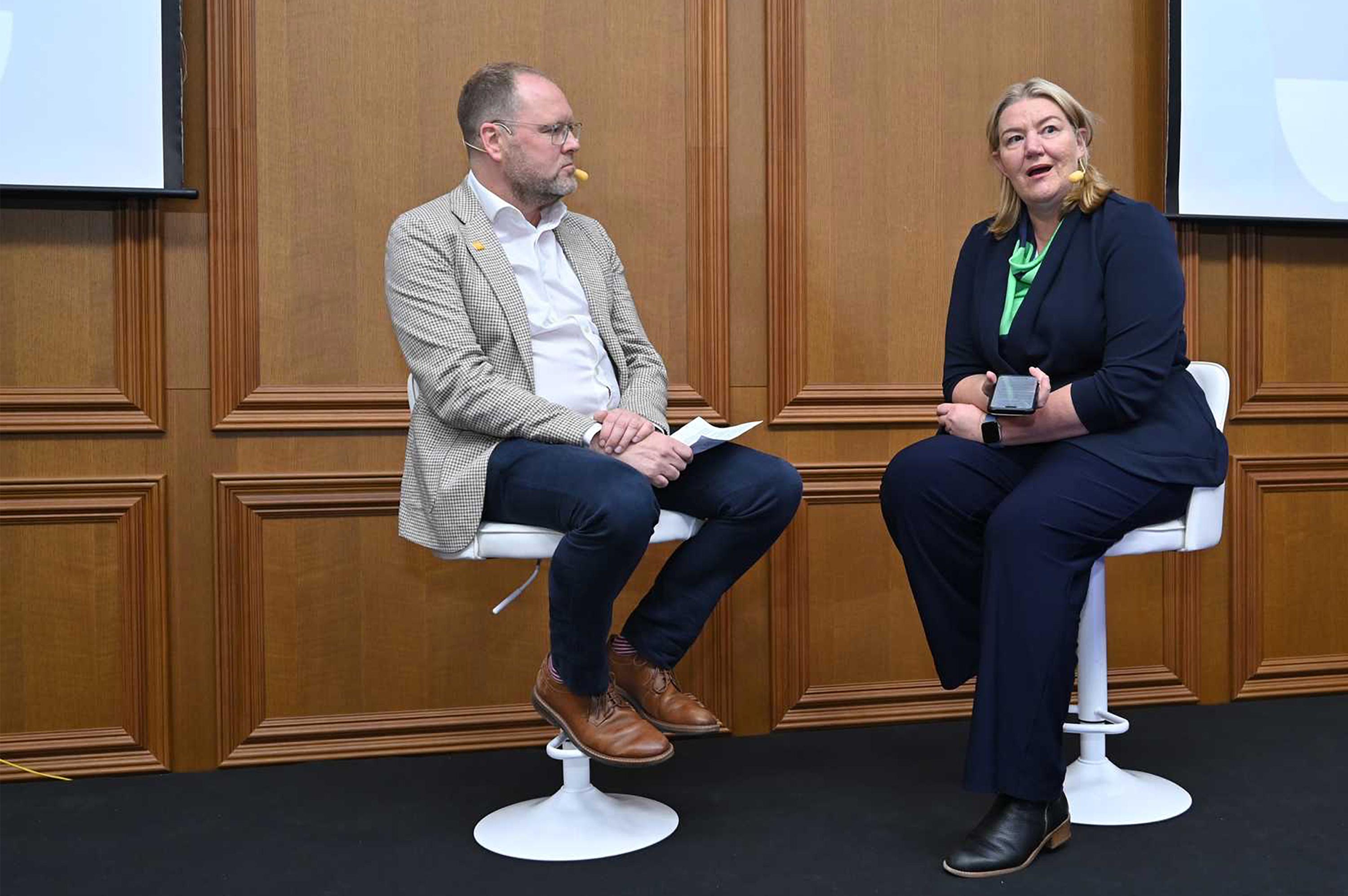
Experts and industry professionals called for increased collaboration at a symposium led by students at the University of Auckland. It showcased the work that the university has been doing alongside Future17 to contribute towards the fulfilment of the UN’s sustainable development goals.
At the heart of more than one of these discussions was the importance of collaboration: between academics and industry professionals, students, and multiple sectors and disciplines coming together with a shared objective of making the world more socially and environmentally sustainable.
‘From Classroom to Real World Change: How Two Globally Recognised Approaches Prepare Students for Sustainability Challenges’ was presented by University of Auckland faculty Dr. Hanoku Bathula, Nina Brosius, Dan Tisch and Andrew Patterson. They discussed the Future17 pedagogy and the business education at University of Auckland’s Centre for Innovation and Entrepreneurship (CIE) and how they work alongside each other.
Future17 connects students with companies from all over the world to solve real problems and work on projects that are centred around sustainability and the UN’s 17 sustainable development goals. CIE gives students a broad education of business principles with particular emphasis on local industries and entrepreneurship. Both offer experiential learning opportunities. Dr Bathula explains that both approaches complement each other through “communication, collaboration, creativity”.
In our interview, Dr. Bathula observed that “complex problems are interdisciplinary by nature” and will often require a range of skills and perspectives to reach the best conclusion.
Future17 gives students the opportunity to understand the importance of different disciplines as the problems posed by the client will often benefit from the perspectives of the whole group. Students from multiple subject areas will need to collaborate effectively to create solutions.
The international base of Future17 adds a new component to group dynamics. Working online with other students who have different backgrounds and are in different time zones is something that they must consider in terms of navigating group dynamics and how they are going to work together. Different systems, specialisations, time zones, and cultural perspectives will all have to be navigated in order for students to collaborate effectively: an experience that they would not have while working exclusively with peers at their own university.
University of Auckland and other Future17 universities are at the cutting edge of innovation when it comes to national and regional industries and make it a priority to teach their students the principles of global business however, Future17 allows students to use those principles and expand their knowledge of other industries and regions.
The effectiveness of the education that a university provides is enhanced through international collaboration. Participating in Future17 projects helps partner universities to expand their international network and diversify the types of projects that students can get involved in.
Dr Bathula comments that one of the primary strengths of the Future17 programme is that when students from different countries come together “they are able to learn from each other” in a naturalistic exchange of ideas and information. Sharing perspectives and skills organically allows students to understand the project as a whole, as well as their role in it.
Sustainability and environmentalism are at the heart of every Future17 project. For some student participants, sustainability may not be a topic that has been directly addressed in their academic programmes. Future17 allows them to expand their knowledge. Due to the group structure of a project, the research into sustainability is often collaborative and students learn from each other, discuss their findings and deliberate on how this new information can be used most effectively to meet their objectives.
In response to concerns about there being a steep learning curve on a Future17 project, Dr Bathula argued that “modern day students are very clever. They are already very aware and knowledgeable about sustainability.” Even if their knowledge of the topic is initially limited, he argues that students will usually have enough contextual knowledge gained through news stories and a general awareness of the world.
Future17 gives them the opportunity to use and consolidate this knowledge and become more experienced in the field. The gaps in their knowledge they are able to fill by relying on each other and adapting their skills to the needs of the collective.
The Centre of Innovation and Entrepreneurship at University of Auckland aims to give students a complete education of business principles with a holistic approach to the different skills required for successful entrepreneurship. Future17 supports these aims by providing students with an industry setting in which they can use the skills they have learned in context and gain professional experience. It brings together the academic and business world and fosters a collaborative environment to address sustainability concerns.
Future17 provides value to the university who can help their students to gain professional experience before graduating. It also provides value to the client company which is given the opportunity to work with a group of students from top universities all over the world and gain sustainability solutions from diverse perspectives.
When asked about the experience of taking part in the symposium, Dr Bathula said that it was "interesting to note that this symposium reflects the Future17 approach, where student-led teams develop creative solutions to SDG challenges. Presenting our work on the student-led Future17 programme at a student-led symposium is therefore a natural fit, as both initiatives embody the same spirit of student leadership, collaboration and innovation in addressing the SDGs.”
Collaboration between students and faculty in academic institutions and business owners in Future17 projects is key to finding the most effective and innovative sustainability solutions. It provides value to both in several ways but most significantly, allows us to achieve a shared goal: to enhance students' academic experience and make the world more socially and environmentally sustainable.




.png)