.jpeg)


Using sustainability to impact student choice

10 December 2025


Summary:
A panel on sustainability and student choice brought together global leaders in higher education to discuss how universities can maintain credibility and leadership in sustainability, especially as student expectations intensify and societal pressures threaten progress. The discussion centered on the critical role of skills development and innovation in driving sustainable impact across institutions.
Our speakers:
A recurring theme was the importance of interdisciplinary collaboration and student-led initiatives. Dan Munnerley from Arizona State University (ASU) described the university’s “Next Lab,” which hires students from diverse backgrounds—K-12, undergraduate, graduate, and seniors—to address ethical technologies and sustainability challenges. This lab fosters innovation by grouping students into “guilds” where they learn and apply skills across disciplines, breaking traditional academic silos. Such models empower students to lead real-world projects, like creating digital twins of water systems using live Internet of Things data, which are now used for research and simulation.
Panelists emphasised the need to integrate sustainability into core university activities—education and research. Per Mickwitz from Lund University highlighted that every undergraduate at ASU is now required to take a sustainability class, embedding principles into the learning framework. This “quiet leadership” ensures that sustainability is not just a visible effort, but a deeply rooted value in the institution’s culture.
Innovation thrives through partnerships with industry and the creation of “living labs.” ASU’s approach involves collaboration with water companies and industry partners to tackle challenges like water usage in Arizona. These living labs are student-led, supported by academics, and funded by industry, allowing students to work on impactful projects that address real community needs. The panel noted that such partnerships are essential for scaling innovation and ensuring that skills learned are directly applicable to pressing sustainability issues.
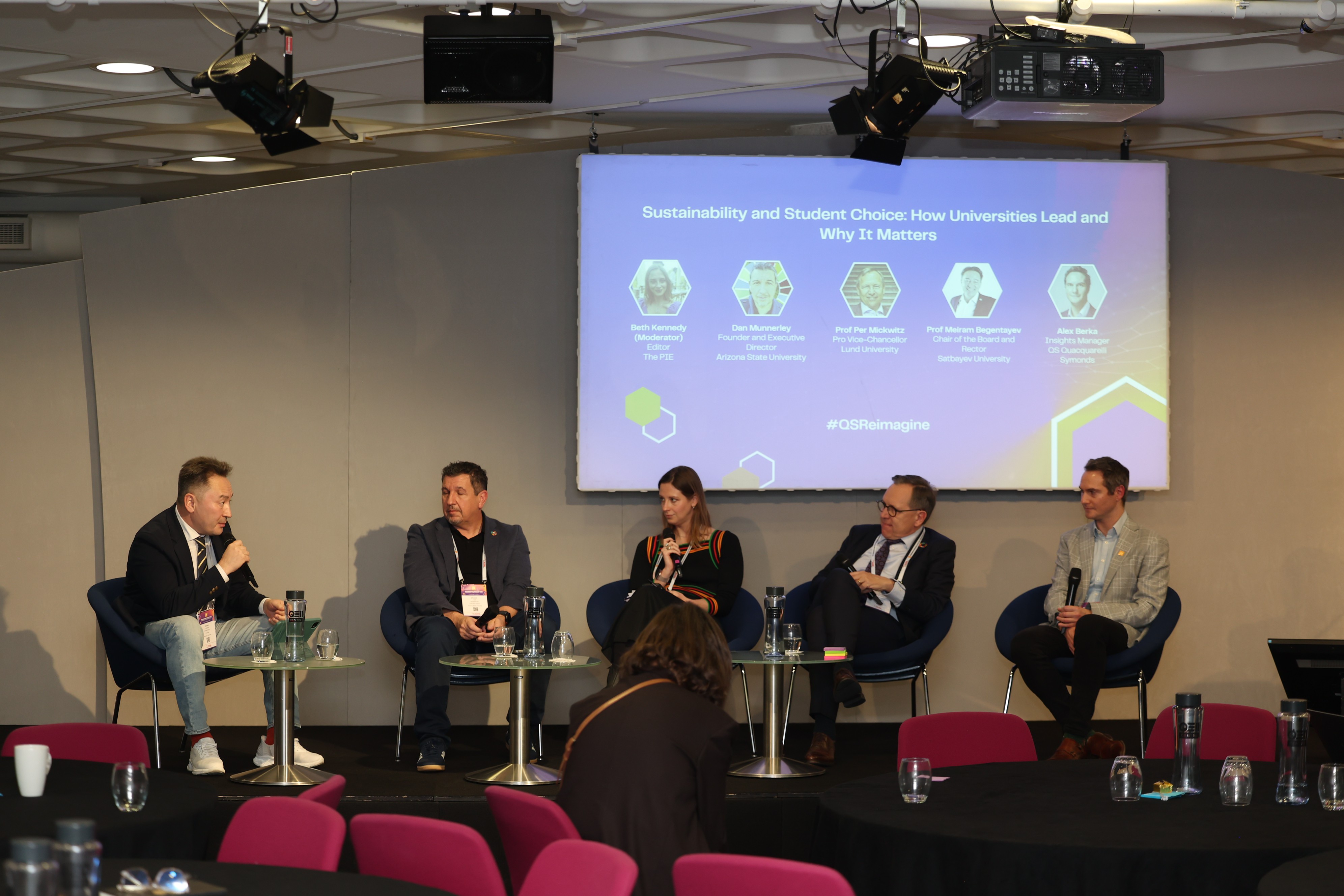
The panel discussed the power of global collaboration through initiatives like Future17, a consortium co-founded by QS and the University of Exeter. This programme enables students to work on global challenges set by industry partners, fostering cross-institutional and cross-sector innovation. The combination of hard skill challenges, such as developing solar-powered AI tools, and policy solutions was highlighted as a game-changer for sustainability education.
A key takeaway was the transformative impact of genuine student leadership. Panellists agreed that student-led projects, where students advocate and lead initiatives, are unstoppable forces in education. Institutions must create environments where student voices drive sustainability agendas, influencing both senior leadership and the wider university community.
The panel underscored that the future of sustainability in higher education depends on fostering interdisciplinary skills, embedding sustainability across curricula, leveraging industry partnerships, and empowering student-led innovation. Universities that prioritise these strategies will not only meet student expectations but also lead the way in global sustainability impact.





.png)