.jpeg)


Can universities expand globally and stay green?

10 December 2025


Universities today face a core challenge: how to stay globally connected while reducing their environmental impact. This tension often sparks the misconception that sustainability means limiting international education.
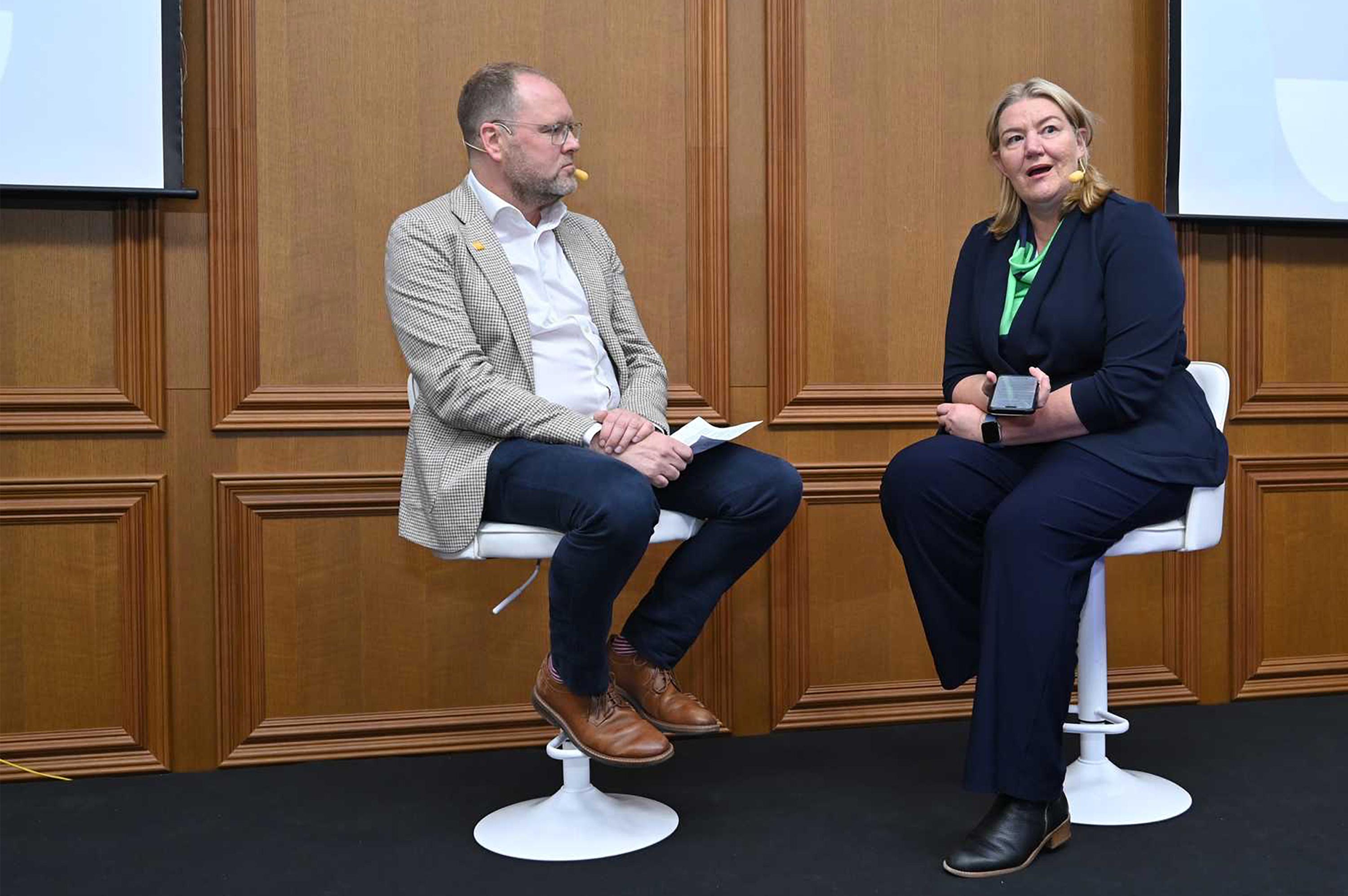
Speaking at the QS Higher Ed Summit: Asia Pacific 2025, Ainslie Moore, Global Chair for CANIE: Climate Action Network for International Educators, addressed this directly. “There is a misconception that people driving sustainability forward is that we want to completely stop international education, stop students and staff from travelling and kill all of your fun because the climate is the most important thing. But the truth is, it's a tension we must balance.”
Leigh Kamolins, Director of Analytics and Evaluation at QS, posed the central question: “Can universities realistically reduce their footprint while expanding their international experience?” Moore’s response was clear: "yes, and they already are."
Institutional policy and leadership remain key to shifting behaviours. As Moore explains, “If you're a leader of an institution, you have an opportunity to champion a sustainable approach, by embedding policy that requires all aspects of the institution to consider the climate impact of what they do before they can make a decision.”
However, real momentum comes from the collective decisions made every day across the institution; in rankings, marketing, recruitment, student services, research support and beyond. Each team holds a piece of the sustainability puzzle.
In university reputation, this could mean ensuring sustainability work is visible and recognised: “You can have a conversation with your academics to ensure that the work they are doing which has a sustainability bent is included in the evidence provided for global university rankings,” she said. In marketing and partnerships, it means choosing collaborators whose values align: “Ask yourself how many agents your universities work with and how to maintain the right partnerships by establishing whether their values align with yours. What are they doing to balance carbon?”
Change is about distributed power, according to Moore: “There are opportunities for people working across institutions to exercise their circle of influence on how they think about this tension, and to change behaviours.”
.jpg)
Traditional long-term study abroad is not accessible to all students, and mobility models must evolve. Outlining the challenge: “Many of our students don't have the opportunity to study abroad for a year. They don't have the financial ability, they have commitments at home… So we have to think differently about how we enable this generation of students to have an international education experience.”
But with a climate lens, global learning can remain both accessible and sustainable. Interregional mobility—especially within Asia—is growing as more students choose to study within the region. Moore suggests, "We can consider a reduced climate cost by encouraging students to study within the region. This approach allows students to deeply engage with cultures closer to home, rather than flying across the world to environments that may feel more familiar than expected."
“It's about intention,” Moore said, "in thinking about how we prioritise activities that consider the climate impact.”
For years, universities have promoted their sustainability activities, but the reality is more complex. Kamolines reflected on learnings in the QS World University Rankings: Sustainability. “For the past decade, every university has told us how sustainable they are and the impact they're having on society, but when we began digging into this a bit further and actually measuring these outputs, we found out that it wasn't as well structured as we'd once thought.”
Frameworks like the QS Sustainability Rankings and the CANIE Accord, which sets out 17 sustainability commitments for institutions, are helping to bring structure and accountability to these efforts.
Some of the highest travel footprints belong not to students but to senior academics. Moore observes, “The most frequent travellers at institutions are actually leaders of labs, high-citation researchers and those well-established in their academic careers.”
However, student travel is still an area in need of creativity when it comes to carbon reduction, as many international students choose to go home during the holidays. Moore believes "there is some creativity needed to even reduce three or four global flights per year to just one trip.” She clarifies the goal: “We don't want students to not go home… but we're talking about turning 4–6 flights a year to one return. That's a significantly smaller carbon debt.”
.jpg)
In many regions, sustainability is a key driver of mobility choices. Kamolins noted that from data in the QS International Student Survey, which collates the perspectives, motivations and behaviours of over 100,000 international students every year, "students from Latin America are driven to study abroad by the prospect of making an impact back in their home country and driving sustainable development. What we're seeing is that they feel there aren't enough opportunities locally to make the impact they want. So, there is a real balance to make here.”
Students today expect alignment between their personal ethics and their universities’ actions. As Moore summarises, “This generation of students have a personal brand… and they want their brand values to align with that of their institution.”
And institutions that articulate their climate commitments can see clear benefits: “We can demonstrate a return to employers of more students enrolling in our institutions if we can align our values… with what our students and prospective students want.”
The experiences of universities across the world show that sustainability and global engagement are not competing priorities, they are mutually reinforcing goals when approached with intention. By embracing regional mobility, measuring impact more rigorously, reducing unnecessary travel and embedding sustainability into every decision, universities can expand their global reach while honouring their environmental responsibilities.
The future of international education will belong to institutions that can do both: go global, and stay green.




.png)